


When Weather Is Not Just Weather
Let’s be honest. We live in a place where the weather likes to keep us guessing, and not in a charming seasonal way. For student athletes, extreme heat and brutal cold are not minor inconveniences. They are real safety risks.
I am writing this not as a worried sports mom in the moment. My daughter was a multi sport student athlete who played three sports throughout the school year and graduated high school in 2017. I am writing this because years later, I still see parents and communities brushing off weather related risks as “part of the game.” It is not.

Extreme temperatures put stress on the body. Heat and cold can cause preventable injuries, exhaustion, and long term health issues. Coaches do their best to manage conditions on the field, but the conversation has to start at home. Parents need to understand the risks so student athletes take them seriously.
The guidelines below come from the New York State Public High School Athletic Association (NYSPHSAA). Policies can be updated, so parents and student athletes should always check the NYSPHSAA website directly for the most current information at nysphsaa.org.
Heat Safety and the Heat Index
The heat index is not just the temperature on your phone. It reflects how hot it actually feels when humidity is factored in. This matters more than people realize.
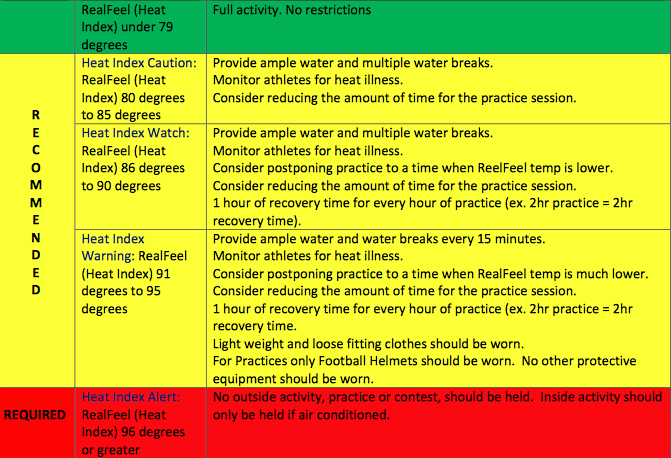
Modified Heat Alert
When the heat index reaches approximately 88 degrees:
-
Forced water breaks are required every 10 to 15 minutes
-
Student Athletes should wear light colored, loose fitting clothing. Mesh fabrics are recommended
-
Rest breaks in shaded areas are mandatory
-
For football and lacrosse, helmets must be removed during water breaks
-
Athletes not involved in contact drills should not wear helmets
During games, officials are required to allow additional time outs for rest and hydration. Yes, this can slow the game down, and that is intentional. Safety comes first.
Full Heat Alert
When the heat index reaches 95 degrees or higher:
-
No physical activity is permitted in any sport
-
Team meetings are allowed
-
Practices, conditioning, and games are not permitted
This is not overreaction. This is how heat exhaustion and heat stroke are prevented.
Parents should also pay attention to “RealFeel” or “Feels Like” temperatures on weather apps. That is what the body actually experiences.
Wind Chill and Cold Weather Safety
Cold weather can be just as dangerous as heat. It is often quieter about it, but the risks are very real.
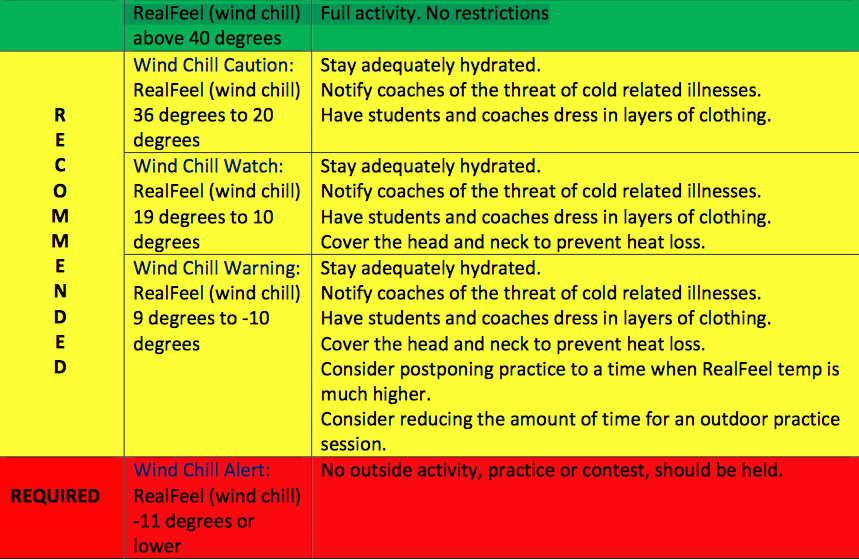
NYSPHSAA uses wind chill calculations to determine safe conditions for outdoor sports. Wind chill measures how cold it feels on exposed skin when wind is factored in.
General Wind Chill Guidelines
-
Above 40 degrees wind chill
Normal play is permitted. Standard hydration and warm ups are sufficient. -
36 to 20 degrees wind chill
Cold weather caution zone. Extra layers are encouraged and warm up breaks should be frequent. -
19 to 10 degrees wind chill
Wind chill watch. Athletes should be fully layered, with hats and gloves strongly recommended. -
9 to minus 10 degrees wind chill
Wind chill warning. Practices may need to be shortened, modified, or postponed. Frostbite risk increases. -
Minus 11 degrees or colder
No outdoor activity should take place. Games and practices should be suspended.
If a student athlete cannot feel their fingers, toes, ears, or face, that is not toughness. That is danger.
What Parents Should Do
This is the practical part that matters most.
-
Make hydration non negotiable in hot weather
-
Make proper layering non negotiable in cold weather
-
Encourage athletes to speak up when something feels wrong
-
Check local weather conditions, including RealFeel temperatures
-
Visit the NYSPHSAA website regularly for updated safety policies
Final Real Talk
It takes a village to raise a child, and it takes adults paying attention to keep them safe.
Extreme weather is not character building. Ignoring warning signs is not grit. No practice or game is worth a preventable injury.
Real talk. Real people. Real responsibility.




Comments are closed.