Category

Community News

Category

Sag Harbor and Bridgehampton have always been reading towns. We are a community that loves stories, ideas, and conversations that stretch longer than expected. From library corners to beach chairs, reading has always been part of our culture. That is why the Reading Revival it’s a movement feels like a natural fit here.

Somewhere along the way, reading got labeled as homework instead of joy. Kids stopped reading for fun. Adults stopped reading because life got busy. Seniors kept reading because they know better, but even they will tell you it takes intention to stay engaged. That is exactly where Reading Revival comes in. It is not a one-off campaign. It is a movement to bring reading back into everyday life.

Bridgehampton Child Care & Recreation Center is leading Reading Revival on the East End, and their goal is refreshingly simple: make reading feel good again. Reading builds confidence. Reading creates access. Reading opens doors. When someone struggles with reading, it affects far more than school. When someone feels confident as a reader, it changes how they move through the world.

Reading Revival it’s a movement is designed for everyone. Kids, teens, adults, and seniors. The reluctant reader. The audiobook fan. The manga obsessed teen. The parent who stopped reading years ago. The grandparent who still reads the paper every morning because it keeps the mind sharp. This movement does not judge how you read. It just asks that you read.

The Center is encouraging our community to make reading part of daily life again. Not just in classrooms, but at home, at the library, in coffee shops, at the beach, and in waiting rooms. Reading in the wild. Reading before bed. Reading together. Reading Revival it’s a movement is about reconnecting reading to real life.

Here is the real talk. Literacy is not just academic. It affects confidence, independence, and opportunity. Reading is foundational. Communities that invest in literacy build stronger futures for children and help adults and seniors stay engaged and empowered. Reading Revival recognizes that reading is not optional for a healthy community. It is essential.

Reading Revival invites everyone to participate. Share what you are reading. Pass along a book. Read with a child. Visit your local library. Take ten minutes a day to read again, not because you have to, but because it matters, because it connects us, because reading is culture.

Hamptons Mouthpiece is proud to support Bridgehampton Child Care & Recreation Center as Reading Revival unfolds throughout 2026. Expect creativity, community stories, and reminders that books still have power. If you have been waiting for a reason to start reading again, this is it.

Join us – The Reading Revival: It’s a Movement.

Real Talk. Real People. Southold knows farming. But the growing Southold chicken farm controversy has forced residents to confront where farming belongs in a changing community. Agriculture is woven into this town’s history, economy, and identity. What Southold is not used to is waking up to find that a 6,000 chicken commercial egg operation is being proposed in the middle of a historic, residential neighborhood that includes affordable housing built by the community itself.

That is exactly what is unfolding on Ackerly Pond Lane, at the center of the Southold chicken farm controversy, where a quiet 15.9-acre property has suddenly become ground zero for a debate that goes far beyond chickens, eggs, or farming in general.

The proposal at the heart of the Southold chicken farm controversy comes from Grant Callahan, an NYU real estate student graduating this spring, who has applied to the Southold Town Planning Board to open Rejuvenate Farms, a pasture-raised egg operation housing up to 6,000 hens.

On paper, the pitch is sustainable agriculture. On the ground, neighbors are asking whether this proposal fits the place it is being asked to occupy.

When the Planning Board opened the public hearing on the Southold chicken farm controversy, the room filled quickly, not with people opposed to farming, but with residents raising serious questions about location, scale, and long-term impact.

Concerns raised by the community included:

  • Odors from manure generated by thousands of birds
  • Increased flies, rodents, and other pests
  • Risks to groundwater and air quality
  • Noise and daily operational disruptions
  • Impacts on quality of life and property values

These concerns are not abstract. Six thousand chickens produce a significant amount of waste. Even well-managed operations create impacts, and those impacts intensify when placed close to homes.

Ackerly Pond Lane is not isolated farmland far from residential life. It is surrounded by homes, families, historic affordable housing community, Colonial Village, that exists because Southold made a deliberate choice to keep working people here.

This land reflects years of community planning, not accidental development. It represents decisions about housing, density, and livability that residents fought to preserve. That context matters. So when a commercial-scale poultry operation is proposed here, residents are asking a fair and necessary question. Why this location?

Clean water is already one of the most fragile resources on the North Fork. Many residents rely on private wells and shallow aquifers. Once groundwater is contaminated, there is no quick or easy fix. Large poultry operations are known to carry risks related to nitrate pollution, bacteria, and runoff from manure, especially during heavy rain events. Even with best practices, failures and oversights happen.

Residents are asking questions that demand clear answers:

  • How will groundwater be protected over time?
  • How often will nearby wells be tested, and by whom?
  • Who is financially responsible if contamination occurs?
  • Will this operation be permitted to access the public water system?

Good intentions do not protect aquifers. Enforceable safeguards do.

This debate does not exist in a vacuum. Suffolk County has been grappling with water quality and supply issues for years, particularly on the East End.

The Suffolk County Water Authority has pursued plans to expand public water infrastructure on the North Fork, including proposed pipeline extensions into areas that have long relied on private wells. These efforts have sparked debate among residents and local officials over system capacity, growth pressure, and long-term environmental impact. That makes one question especially important.

If a large commercial poultry operation is approved in a residential area, will it be allowed to draw from a public water system that is already under strain? Residents are not only concerned about today. They are concerned about precedent.

So far, no elected official has issued a formal public endorsement or rejection of the proposed chicken farm. That silence, however, does not mean water concerns are new or insignificant.

County and town officials have spent years acknowledging the vulnerability of Long Island’s aquifer system. They have debated nitrogen pollution, septic system failures, and the long-term sustainability of drinking water across Suffolk County. Those same unresolved concerns are now at the center of this proposal.

Residents are watching closely to see whether local and county leaders will apply the same caution they have voiced in broader water debates to a specific project that could affect a residential neighborhood and surrounding farmland.

This is not only a residential concern. Local vineyards have also raised objections, including Sparkling Pointe Vineyards and Winery.

In a letter submitted to the Planning Board, Sparkling Pointe cited concerns about odor impacts from a large poultry operation and how those impacts could affect visitors, outdoor experiences, nearby schools, and surrounding businesses.

When one agricultural operation raises concerns about another, the issue shifts from emotion to compatibility, environmental balance, and economic impact.

Southold’s Right to Farm law exists to protect agriculture from unreasonable interference. It was never intended to override thoughtful land use planning or dismiss legitimate community impact.

The law allows farming. It does not require the town to treat every location as appropriate for every scale of operation.

Protecting agriculture and protecting neighborhoods should work together.

Strip away assumptions and labels, and the message from residents is consistent:

  • We support farming.
  • We support sustainability.
  • We support local food.
  • We do not support placing a large commercial poultry operation in the middle of a residential, historic, affordable housing community.

That is not anti-farm. That is pro-community.

The Planning Board’s decision will shape more than a single application. It will signal whether Southold prioritizes clean water, environmental protection, and community trust, or whether technical compliance alone is enough. Once a precedent is set, it is difficult to reverse. This debate is not just about chickens. It is about land use, water, and the future of the community.

Real Talk. Real People.

Real talk, real people. There are places in a community that quietly hold everything together, they do not shout, they do not posture, they do not ask for applause, but if they disappeared tomorrow, people would feel it immediately. If the Center were not here schools would feel it, families would feel it, and kids would feel it. The Bridgehampton Child Care & Recreational Center is one such place.

I recently spent time back at the Center, walking the halls, talking with staff, and watching kids move comfortably from homework to art to conversation. I watched them settle in, laugh, ask questions, and just exist without fear of being rushed or judged. I will be honest, I left more emotional than I expected.

This is not because I do not already understand how important this place is. I do. It is because sometimes you forget just how much weight one organization can carry for an entire community until you are standing in it again.

Afterschool Program

Let me make this real.

My youngest took advantage of programs at the Center, including SAT prep courses. If you have ever lived through SAT season as a parent, you already know exactly what that looks like. It is stress layered on stress. It is pressure sneaking into dinner conversations. It is late nights that turn into early mornings. It is questioning every parenting decision you have ever made while Googling practice tests far too late at night.

The Center stepped in and helped carry that load. Academically, yes, but just as importantly, emotionally and financially, because it is never just about the test. It is about confidence. It is about telling a child that they belong in the room, that they are capable, and that they are not behind simply because they need support. That kind of support does not always make headlines, but it changes lives quietly and permanently.

The Bridgehampton Child Care and Recreational Center is a historically Black, community-based organization serving all marginalized children and families on the East End. That history matters. The issues of mission and the way it shows up every single day matter even more. Let me be clear.

This is not babysitting.
This is not filler programming.
This is not checking a box.

This is food security when families suddenly lose access to SNAP benefits. This is literacy support when children are struggling to read and falling through the cracks. This is mentorship when teens are trying to understand who they are in a world that rarely slows down long enough to guide them. Real talk, real people. These are real needs being met in real time.

If there is one place where everything connects, it is the After-School program.

This is not a holding pen for kids waiting to be picked up. This is a thoughtfully designed space built around structure, care, and growth. Under the leadership of Robert King, the After School Program Director, afternoons are intentional.

Robert King & Jenna Solis

Kids arrive and start with homework, not as punishment, but as support. Students who need extra help receive tutoring and one-on-one guidance. Kids who do not have assignments that day are not ignored or sidelined. They are engaged in enrichment that builds skills, curiosity, and confidence.

Learning here is layered. Math shows up in cooking and measurements. Reading turns into discussion and storytelling. Critical thinking comes alive through art, group projects, and hands-on activities. Programming adapts to different age groups so younger children feel nurtured while older kids feel respected and challenged.

There are clubs, rotating activities, and real-world exposure that many children would not otherwise experience. Photography, Gardening, Art, Cooking demonstrations, Horseback riding, and Restaurant outings that teach independence and confidence. These are not extras. They are part of learning how to move through the world.

And just as important as the programming is consistency. Kids know who will be there when they walk through the door. They know they are safe. They know they will be seen and heard. That stability allows them to exhale and grow at the same time. That is the difference between supervision and support. And that difference matters.

The literacy programs alone deserve attention. Reading is not just about words on a page. Literacy is access. Literacy is confidence. Literacy is the difference between struggling silently and being able to advocate for yourself later in life.

And this work does not stop with children.

Adult literacy programs are just as critical. Parents and caregivers need tools to navigate schools, jobs, healthcare systems, and everyday paperwork with dignity and confidence. When families are empowered together, the impact multiplies. When a child or an adult learns to love reading, doors open that can never be closed again.

One of the programs that truly stopped me in my tracks is Brothers in Dialogue, an ongoing quarterly virtual series continuing through 2026.

This program creates a safe and affirming space for boys and men, from high school students to elders, to talk honestly about identity, accountability, and community. No pretending. No posturing. Just a real conversation.

We do not talk enough about how rare that is or how necessary it is. If we want healthier communities, we have to create spaces where boys and men can speak openly and be heard. This program does exactly that.

Michelle “Bonnie” Cannon

Michelle Bonnie Cannon has been the Executive Director since 2007. Seventeen years of showing up. Seventeen years of advocating, persuading, fundraising, and building relationships that keep this Center strong.

Bonnie should teach a masterclass in networking and the art of persuasion. Not the slick kind. The kind rooted in purpose. The kind that makes people want to stay involved because they understand the why.

The Board helps guide that mission forward. Led by Board Chairwoman Dr. Florence Rolston, alongside Vice President Dan Rattiner, Jerlean Hopson, Arlean Van Slyke, Crystal Brown, Susan Lazarus Reimen, former New York State Assemblyman Fred Thiele, Minister Jerome Walker, and Rev. Tisha Dixon Williams, this is a board grounded in lived experience, civic leadership, faith, and deep community roots.

Camryn Highsmith

And then there is the staff, the people who make this work real every single day. Jenna Solis keeps the operation moving with intention and care. Camryn Highsmith supports teens and families navigating college readiness and life transitions. Gloria Cannon runs a food pantry that has become a lifeline when SNAP benefits disappear overnight. Ella Engle Snow tends the Soul Garden. Faith Evans brings creativity into the classroom. Educators, drivers, outreach workers, artists, and mentors show up daily because they care enough to do the work.

Over the coming months, I will be spotlighting many of these individuals more deeply because their stories deserve to be told.

Strong institutions do not stand alone.

One of the most meaningful partnerships supporting the Center is with Wölffer Estate Vineyard. Through the annual Lighting of the Vines fundraiser, hosted by co-owner Joey Wölffer, vital funds are raised to support underserved families across the East End. Joey also serves on the Center’s advisory board, lending her voice, visibility, and commitment to community wellness.

Lighting of the Vines fundraiser at Wölffer Estate Vineyard. Photo by Kurt H. Leggard

This is what authentic philanthropy looks like when it is rooted in relationships, not optics.

Here is the part people often forget. The need does not end after the holidays. Hunger does not take a summer break. Kids do not stop needing support when school lets out. The Center operates year-round, and so does the need.

Year-round donations keep the food pantry stocked, the literacy programs running, the mentors available, and the lights on. Year-end gifts help the Center prepare to meet the needs of the community with strength and stability so it can respond when families need support most. This is not charity. This is an investment in people.

If you are reading this and thinking this does not affect you, I promise you that it does.

Strong communities do not happen by accident; they happen because places like this exist. Places that feed families, teach children, support teens, and create safe spaces for hard conversations. They show up when systems fail.

This Center helped my family, more importantly, it helps families every single day who may not have another option.

That is why it matters.
This is why it deserves attention, support, and year-round commitment.

Ribbon Cutting of the new building, Governor Kathy Hochul, 2023, photo Kurt H. Leggard

Real talk, real people. This is what community looks like when it works.

If you live or work in Southampton, you do not need a traffic report to tell you what is happening on CR-39 traffic pattern Southampton. You already feel it in your soul. Nurses, landscapers, teachers, restaurant staff, business owners, shoppers on a bagel run, and weekend warriors heading to the beach — we are all in one giant rolling therapy session every morning and afternoon.

So when something changes on CR-39 Southampton, even slightly, people have feelings. Big feelings.

And as a very wise woman once said, “Slow down and live.”
It is advice that applies to the roads and honestly to life itself.

To help sort out what is happening with the CR-39 traffic pattern Southampton, I hopped in the car with Charlie McArdle, Superintendent of Highways for the Town of Southampton and Co-Chair of the Traffic Mitigation Committee. This is not a press conference. This is literally me holding a camera, stuck in traffic with everyone else, asking the questions you have been shouting at your windshield. Let’s ride.

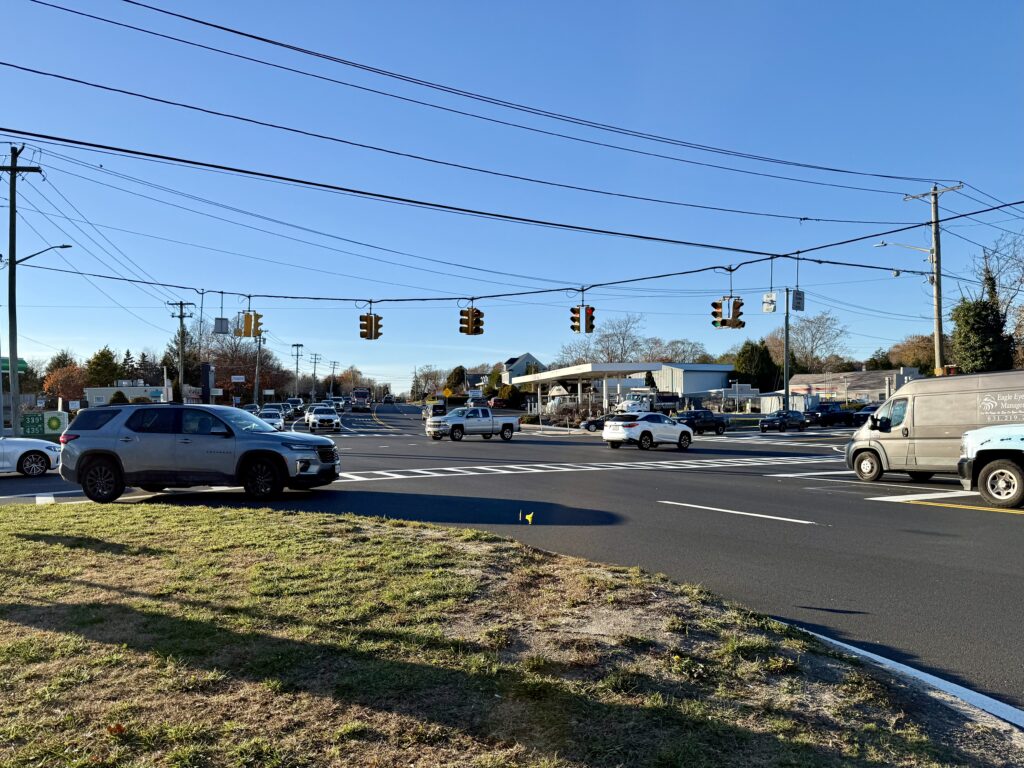
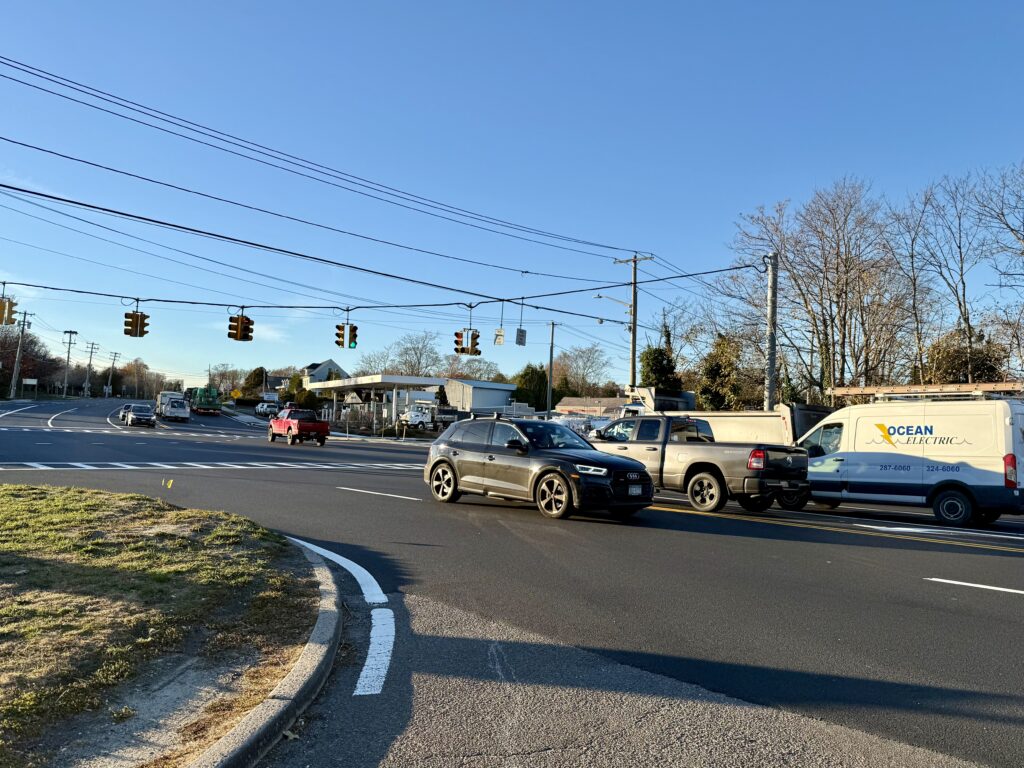
Approaching Sandy Hollow Road, the most noticeable update is that CR-39 temporarily narrows to one lane westbound, before expanding again near McGee Street. If your first reaction is “Wait… didn’t we fight for TWO lanes?” welcome to the club.

Charlie explains it simply:

“We reduced two lanes down to one for a little over a half mile so the traffic exiting Sandy Hollow can keep moving. Before this change, both intersections worked against each other and the whole stretch crawled.”

Instead of two traffic lights competing for attention, they are finally cooperating. It is progress, even if it feels weird.

The Town has synchronized signals so the main flow clears multiple cycles at a time. Drivers going north and south still get their turn; just a slightly longer wait, so the highway keeps pushing forward.

The idea is to keep you on the highway instead of detouring through neighborhoods. Yes, Charlie called out the cemetery cut-through. Yes, he looked directly at me when he said it. I remain silent on legal advice.

This is version 2.0 of a pilot program tested in the spring. That earlier version made the trip from CR-39 to the Lobster Inn just seven minutes. People loved the speed. The manpower demands, not so much.

This version is the same concept with less staffing and fewer blinking lights.

“If drivers merge early and stop being aggressive, this should be smooth,” Charlie says with confidence.

Key phrase: merge early.
Not merge at the cone like you’re auditioning for Fast & Furious: Hamptons Drift.

Before now, police had nowhere safe to pull anyone over. Speeders and “creative lane interpreters” had a field day. Enforcement created danger.

Now, officers have a shoulder — and that means safer accountability for everyone on the road.

Not glamorous. Definitely necessary.

Charlie says yes. Strongly.

“There is no off-season anymore. The workforce keeps these roads full all year.”

Contractors, tradespeople, deliveries, house maintenance – The Trade Parade has become a permanent institution.

I agree with him partially. The Trade Parade has always been brutal. But summer absolutely adds its own special brand of chaos. We agreed to disagree respectfully, which is refreshing these days.

I made the point that if workers could live closer to their jobs, we would see fewer vehicles clogging CR-39. That is just common sense.

Charlie countered that affordable housing lotteries sometimes bring new residents into town rather than supporting those who already live and work here.

I countered back with examples of recent Housing Authority lotteries where local residents did win. Housing is complex. But one thing remains true:

Traffic is a housing issue too.
Communities cannot function when the workforce is forced to commute long distances just to afford rent.

Right now, this plan is a modified pilot:

• Monday through Friday
• Afternoon commute (approximately 3:30 pm to 7 pm)
• Being closely monitored
• Open to adjustments
• Feedback encouraged

Concerns can be submitted to the Traffic Mitigation Committee, which includes members of Town leadership, Suffolk County DOT, police, fire, and EMS officials.

email: Task Force: mailto: traffic@southamptontownny.gov

If something is not working for you, speak up. They are listening.

• Do not wait until the last ten feet to merge
• Do not block driveways or side-street exits
• Stay off the cemetery paths (you know who you are)
• Give yourself a little extra time while everyone learns the new flow

If you see a red light ahead but clear road in front of you, that is good. That means the synchronized system is doing its job.

Road improvements do not happen by magic. Planning takes time. Adjustments take patience. Community input takes honesty. And sometimes, the solution feels uncomfortable before it feels better.

The traffic will never fully disappear. This is the Hamptons. But if these changes keep more cars on the highway, reduce dangerous merges, and ease pressure on our side streets, then we are moving in the right direction.

And once again, in the words of a wise woman:

Slow down and live.

Let’s all try that –on the road and off it.

Have you tried the new CR-39 pattern yet? Drop your thoughts on my social media . I will be sharing community feedback directly with Charlie and the Traffic Mitigation Committee.

Real Talk, Real People – covering the East End like only we do.

What do you get when you mix elegance, activism, and a room full of people who are never afraid to speak truth to power?

The NAACP Eastern Long Island Branch 73rd Annual Membership Luncheon – and baby, it was a whole vibe.

The Birchwood of Polish Town in Riverhead transformed into a powerhouse gathering where community met purpose over chicken marsala and a mission older than many of the elected officials in the room.

Eastern Long Island NAACP President Dwight Singleton opened with humor:

“I am a recovering elected official…
Thank God it’s not an election year!”

✨ Who Was in the Room?

It was a strong showing of support for the NAACP mission. Among the invited guests were County Executive Ed RomaineMichelle Cannon from the Bridgehampton Child Care & Recreation CenterMinerva Perez of OLA, Mayor  William Manger Jr. Southampton Village, members of the Southampton Town CouncilMichael IasilliBill PellCounty Legislator Anne WelkerAssemblyman Fred ThieleAssemblyman Tommy Schiavoni, Rev. Charles A. Coverdale of First Baptist of Riverhead and his beautiful wife First Lady Shirley Coverdale and so many other dedicated officials and community leaders who consistently show up – not just when cameras are flashing.

When the East End shows up like this, you feel it.

❤️ Honoring Legacy and Love

Singleton honored the late, beloved Maurice “Moose” Ware, whose name brought a heartfelt standing ovation — a reminder that leadership isn’t about titles, it’s about service.

Then came the personal moment that captured the room…

Singleton introduced his real boss –his wife, Sandra – proudly celebrating 20 years of marriage:

“I’ve been promoted from assistant to security and transportation – to Director!”

Black love always gets the applause it deserves. 🍷❤️

💪🏾 Membership is the Mission

Dwight didn’t just speak – he rallied the room:

“You don’t have to join today.
You don’t have to join tomorrow.
But you will have that application in by Monday at 9 AM!”

Because this mission isn’t just history ; it’s right now.

Affordable housing.
Voting rights.
Economic justice.
Education.
Environmental equity.

This is the work.

👑 An Icon in the Building

At 95 years young (and looking fabulous), Ms. Rogers was honored and the room rose for her like royalty. A true living legacy.

🎤 Real Talk

In times when rights are under fire and affordability feels like fantasy, gatherings like this remind us:

➡️ The movement is alive
➡️ The mission continues
➡️ The East End refuses to be silent

Membership keeps the momentum going — and pushes justice forward.

👏 Final Word

This wasn’t just a luncheon.
It was a declaration:

We’re still here.
Still strong.
Still fighting.
Still fabulous while doing it.

Real Talk, Real People.