Category

Hamptons Happenings

Category

Traffic, Housing, and the Real People Behind the East End Economy. To understand the Hamptons workforce housing crisis, start with traffic. Anyone who has ever sat on County Road 39 knows the routine. Coffee in hand, patience running low, inching forward while questioning life choices. I once called it a “rolling therapy session,” and honestly, that still feels accurate.

But here is the thing. That traffic is not just an inconvenience. It is a moving reflection of the Hamptons workforce housing reality. Those cars are filled with the people who make this place work.

The Hamptons workforce housing conversation is not about buildings. It is about people! Its the teachers shaping the next generation. It’s the nurses working long shifts. It’s the restaurant staff who make sure your dinner arrives just right. It’s the landscapers who maintain the beauty that defines the East End.

The Hamptons may be known for luxury, but it runs on everyday people, and without real solutions for the Hamptons workforce housing, those people are being pushed further away from the communities they serve.

Every summer, the demand for Hamptons workforce housing becomes impossible to ignore. Restaurants double their staff. Hotels bring in additional housekeeping teams. Catering companies prepare for a season of weddings that feel like small cities gathering for a night. Landscaping crews expand overnight.

Many businesses rely on seasonal programs like the H-2B visa and the J-1 visa to fill positions when local labor is not available. Without this workforce, the Hamptons summer experience simply would not exist. But even with these programs, the Hamptons workforce housing shortage remains front and center.

Here is the uncomfortable truth about Hamptons workforce housing: the people who work here often cannot afford to live here. Rents are sky high. Home prices are out of reach. A single bedroom can cost more than a full paycheck for many workers. This forces people to commute from farther west in Suffolk County or share housing in ways that are far from ideal.

Some employers step in and rent houses for staff. Others try to provide stipends. But the reality is simple. Hamptons workforce housing is no longer just a housing issue. It is a workforce issue.

In a previous Hamptons Mouthpiece article, I asked a question that stuck with people. Who will do the laundry? That question cuts to the core of the Hamptons workforce housing crisis. Communities cannot function without the people who keep them running.

We can build luxury homes. We can welcome visitors. But without workers, none of it works. The Hamptons workforce housing conversation is about preserving the balance between a destination and a community.

Behind the scenes, the Hamptons workforce housing solution often looks very different from what people imagine. Employers quietly rent houses and place multiple workers inside. Hotels create staff housing arrangements.

Workers share rooms, coordinate their schedules, and rely on their employer’s transportation to get to work. It is a system that keeps businesses open, but it is not a long-term solution to the Hamptons workforce housing challenge.

The Hamptons workforce housing conversation also intersects with immigration and labor systems. Temporary workers often come through legal programs tied to specific employers. That structure can create stability for businesses, but it can also make workers feel dependent on their employer for both income and housing.

At the same time, agencies like U.S. Immigration and Customs Enforcement investigate worksite violations and enforce immigration laws. The result is a system that can feel complicated for both employers and workers navigating the realities of Hamptons workforce housing.

This is where the Hamptons workforce housing conversation becomes very real for 2026. Across seasonal communities like the Hamptons, Martha’s Vineyard, and Nantucket, business owners are asking the same question. Will this summer feel different?

Between rising housing costs, ongoing traffic challenges, and increased awareness of immigration enforcement, there is growing uncertainty about the seasonal workforce. When the workforce is uncertain, the Hamptons workforce housing issue becomes even more urgent.

Here is the Real Talk side of Hamptons workforce housing. If employers have to pay for housing, that cost does not disappear. It shifts, and some businesses may absorb it. Others may raise prices. Some may adjust wages or limit hiring. Others may increase pay to attract workers willing to commute. There is no one answer, but one thing is clear, Hamptons workforce housing is now part of the business model.

That daily drive on County Road 39 is more than just congestion. It is a visible sign of the Hamptons workforce housing crisis. Those cars represent long commutes, early mornings, and workers doing what they need to do just to stay employed on the East End. When people cannot live where they work, traffic becomes the connector between the workforce and the economy. And when that connection breaks, the impact is felt everywhere.

If the Hamptons workforce housing crisis continues unchecked, the consequences will not be subtle. Restaurants will reduce hours. Hotels will limit bookings. Schools will struggle to hire teachers. Healthcare systems will feel the strain. This is not hypothetical. It is already happening in small ways.

The Hamptons workforce housing conversation is about preventing those small cracks from becoming larger problems.

Despite the challenges, there is still hope in the Hamptons workforce housing conversation. Local initiatives, including efforts connected to the Southampton Town Housing Authority, are beginning to address the need for workforce housing. Conversations are happening. Ideas are being explored. The Hamptons have always been a place of reinvention.

There is no reason it cannot lead the way in solving the Hamptons workforce housing challenge as well.

So the next time you are sitting in traffic, take a moment and look around. Every car is part of the Hamptons workforce housing story. Someone is heading to work. Someone is making your dinner. Someone is teaching your children. Someone is caring for your family.

The Hamptons is more than a destination. It is a community. And communities only work when the people who power them have a place to live.

Real Talk. Real People.

Walking into this show felt like stepping into the future while standing firmly in history. From the moment I entered the space, the Harlem Fine Arts Show revealed itself as more than a traditional exhibition. The energy was alive, immersive, and deeply rooted in Black art and cultural storytelling.

Artist: M. Gasby Brown

The Harlem Fine Arts Show has always been about more than presentation. It is about presence. This year’s exhibition felt intentional and cohesive, blending African Diaspora art with innovation while continuing to elevate contemporary Black artists on a global stage.

New technology played a powerful role in bringing the work to life at the Harlem Fine Arts Show, particularly through installations at O’Bannon Studios. Pieces evolved before your eyes, creating an immersive experience that expanded how Black art is seen and felt.

The 3D artwork by Artbunga LLC was a standout moment at the Harlem Fine Arts Show, stopping viewers in their tracks and challenging traditional gallery norms. The emergence of a young artist from Paloma Hostin reinforced why representation within the Black art community matters at every age.

artist: Paloma Hostin

The Harlem Fine Arts Show also showcased emotional depth through texture and material. The delicate use of lace fabric by M. Gasby Brown felt poetic and intentional, offering a softer yet powerful expression of Black creativity.

Zimbabwean contemporary artist Keith Zenda brought ancestral symbolism to the forefront at the Harlem Fine Arts Show, blending bold color with cultural heritage. His work bridged tradition and modernity, highlighting the global reach of African Diaspora art.

This was Black art in motion at the Harlem Fine Arts Show. Artists were not only creating visually stunning work but also pushing culture forward with purpose, soul, and intention.

What made the Harlem Fine Arts Show especially meaningful was its commitment to community impact. The Bridgehampton Child Care and Recreational Center in Bridgehampton, New York, was a benefactor of the event, reinforcing the connection between art, responsibility, and social good.

Bridgehampton Childcare Center

By supporting a local nonprofit, the Harlem Fine Arts Show demonstrated how cultural institutions can engage with community needs while uplifting Black artists and strengthening the broader Hamptons art scene.

The moment that felt most personal came with the reminder that Dion Clarke, founder and CEO of the Harlem Fine Arts Show, is a Sag Harbor resident. This connection grounds the show in the East End while maintaining its international influence.

This July, Dion Clarke will bring an art show to Sag Harbor, extending the legacy of the Harlem Fine Arts Show into the Sag Harbor art scene and creating a powerful homecoming rooted in Black history and culture.

The Harlem Fine Arts Show is not just an exhibition. It is a vibe, a movement, and a cultural force. It reminds us that Black art is not static or confined to the past but living, evolving, and shaping the present.

Year after year, the Harlem Fine Arts Show proves that when Black artists are centered and celebrated, the result is not only beautiful work but lasting cultural impact felt far beyond the gallery walls.

Some nights feel like events. Others feel like moments, and The PowHer Dining Experience hosted by Black Women of Long Island (BWLI) was the kind of Westbury event that felt like something bigger than a schedule or a flyer.

Westbury was glowing as a room filled with beautiful Black women gathered inside Post 270 Westbury, a new restaurant quickly becoming part of the Long Island cultural conversation. The atmosphere was fun, elevated, and welcoming, reflecting exactly why BWLI events resonate so deeply with Black women across Long Island.

It felt like Black joy in real time at this Black women networking event on Long Island, and that matters.

Founder BWLI Judith Jacques & Vanessa Leggard

A full-circle BWLI moment

The first time I was introduced to Black Women of Long Island, it was at a Hamptons event, one of the summer gatherings BWLI is known for out east. Their presence in the Hamptons has long represented connection, culture, and intentional community-building for Black women.

Seeing BWLI bring that same Hamptons energy to Westbury felt like a full-circle moment. Different season, different zip code, same mission of empowerment, visibility, and sisterhood across Long Island.

It was a reminder that Black women community spaces on Long Island are not tied to geography. They move where they are needed.

A room built on presence, not performance

What stood out most at this BWLI PowHer Dining Experience was how effortless the room felt. Black women did not have to explain themselves, shrink themselves, or perform for anyone.

Entrepreneurs, educators, creatives, and corporate leaders filled the room, representing the diversity and strength of Black women leadership on Long Island. The energy reflected ease, confidence, and mutual respect.

photo credit: Photography by Kurt, LLC

At its core, Black Women of Long Island continues to prove that joy, rest, and connection are not extras. They are essential.

First impressions of Post 270 Westbury

Let’s talk about the venue itself. Post 270 Westbury is visually striking, with a beautiful bar, warm lighting, and a layout that works well for social gatherings and networking events.

The cocktails at Post 270 were well crafted and flavorful, helping set the tone early for conversation and connection. The bar area, in particular, worked perfectly for mingling during this Westbury networking event.

You could actually hear each other talk, which is rare and refreshing in many Long Island restaurants hosting large events.

Judith Jacques & Karine Jean-Pierre, photo credit: Photography by Kurt, LLC

A thoughtful note on the dining experience

The food experience at Post 270 Westbury felt well suited to a large-scale event, which is understandable given the size and pace of the evening. The cocktails and atmosphere truly carried the night.

I would be interested in returning to Post 270 restaurant in Westbury during a quieter service to experience the menu in a more intimate dining setting. New venues take time to find their rhythm, and this space shows genuine promise.

photo creditL Photography by Kurt, LLC

The conversation that shifted the room

The evening moved from celebration to reflection during a powerful conversation with Karine Jean-Pierre, centered around her book, Independent: A Look Inside a Broken White House, Outside the Party Lines, a timely read discussed at this BWLI event.

The Pow Her Dining Experience, photo Photography by Kurt, LLC

As the former White House Press Secretary, Karine Jean-Pierre spoke candidly about stepping into positions of power that were never designed for Black women and navigating political spaces shaped by pressure and expectation.

Her words brought stillness to the room, reinforcing why Black women leadership conversations on Long Island matter now more than ever.

Vanessa L & Karine Jean-Pierre

Leadership, pressure, and real talk

Karine Jean-Pierre shared that Independent was not the book she originally planned to write, but one shaped by what she witnessed after leaving the White House. She spoke openly about Black women being under attack and communities feeling targeted.

She reminded the audience that as White House Press Secretary, she was never speaking for herself, but for the President of the United States. That reality mirrors what many Black women experience in leadership roles across Long Island and beyond.

Her honesty resonated deeply with the Black Women of Long Island community in the room.

Marjorie Mesidor, Judith Jacques, Olena Nicks, Karine Jean-Pierre, Photo: Photography by Kurt, LLC

Why nights like this matter

Events like The PowHer Dining Experience highlight why in-person community spaces remain essential for Black women on Long Island.

This was not about optics or social media moments. It was about listening, connecting, and exhaling together in a space created by BWLI with intention.

Black women do not always get to rest in public spaces, and this Westbury BWLI event allowed that pause.

My takeaway

Westbury showed up, and Black Women of Long Island showed out. Post 270 Westbury provided a stylish new backdrop for an evening rooted in conversation, leadership, and connection.

This night was not about perfection. It was about presence, purpose, and community.

270 Post Restaurant, BWLI Pow Her event 2026, Photo: Photography by Kurt, LLC

Would I return to Post restaurant Westbury? Yes.
Would I recommend it for cocktails and conversation? Absolutely.
Would I be curious to experience it during a more intimate dining service? Definitely.

Because sometimes the real story at a Long Island Black women event is not just what is on the plate, but who is in the room.

And that part was beautiful.

Hamptons Mouthpiece
Real talk. Real people. Real moments.

Real talk, real people. There are places in a community that quietly hold everything together, they do not shout, they do not posture, they do not ask for applause, but if they disappeared tomorrow, people would feel it immediately. If the Center were not here schools would feel it, families would feel it, and kids would feel it. The Bridgehampton Child Care & Recreational Center is one such place.

I recently spent time back at the Center, walking the halls, talking with staff, and watching kids move comfortably from homework to art to conversation. I watched them settle in, laugh, ask questions, and just exist without fear of being rushed or judged. I will be honest, I left more emotional than I expected.

This is not because I do not already understand how important this place is. I do. It is because sometimes you forget just how much weight one organization can carry for an entire community until you are standing in it again.

Afterschool Program

Let me make this real.

My youngest took advantage of programs at the Center, including SAT prep courses. If you have ever lived through SAT season as a parent, you already know exactly what that looks like. It is stress layered on stress. It is pressure sneaking into dinner conversations. It is late nights that turn into early mornings. It is questioning every parenting decision you have ever made while Googling practice tests far too late at night.

The Center stepped in and helped carry that load. Academically, yes, but just as importantly, emotionally and financially, because it is never just about the test. It is about confidence. It is about telling a child that they belong in the room, that they are capable, and that they are not behind simply because they need support. That kind of support does not always make headlines, but it changes lives quietly and permanently.

The Bridgehampton Child Care and Recreational Center is a historically Black, community-based organization serving all marginalized children and families on the East End. That history matters. The issues of mission and the way it shows up every single day matter even more. Let me be clear.

This is not babysitting.
This is not filler programming.
This is not checking a box.

This is food security when families suddenly lose access to SNAP benefits. This is literacy support when children are struggling to read and falling through the cracks. This is mentorship when teens are trying to understand who they are in a world that rarely slows down long enough to guide them. Real talk, real people. These are real needs being met in real time.

If there is one place where everything connects, it is the After-School program.

This is not a holding pen for kids waiting to be picked up. This is a thoughtfully designed space built around structure, care, and growth. Under the leadership of Robert King, the After School Program Director, afternoons are intentional.

Robert King & Jenna Solis

Kids arrive and start with homework, not as punishment, but as support. Students who need extra help receive tutoring and one-on-one guidance. Kids who do not have assignments that day are not ignored or sidelined. They are engaged in enrichment that builds skills, curiosity, and confidence.

Learning here is layered. Math shows up in cooking and measurements. Reading turns into discussion and storytelling. Critical thinking comes alive through art, group projects, and hands-on activities. Programming adapts to different age groups so younger children feel nurtured while older kids feel respected and challenged.

There are clubs, rotating activities, and real-world exposure that many children would not otherwise experience. Photography, Gardening, Art, Cooking demonstrations, Horseback riding, and Restaurant outings that teach independence and confidence. These are not extras. They are part of learning how to move through the world.

And just as important as the programming is consistency. Kids know who will be there when they walk through the door. They know they are safe. They know they will be seen and heard. That stability allows them to exhale and grow at the same time. That is the difference between supervision and support. And that difference matters.

The literacy programs alone deserve attention. Reading is not just about words on a page. Literacy is access. Literacy is confidence. Literacy is the difference between struggling silently and being able to advocate for yourself later in life.

And this work does not stop with children.

Adult literacy programs are just as critical. Parents and caregivers need tools to navigate schools, jobs, healthcare systems, and everyday paperwork with dignity and confidence. When families are empowered together, the impact multiplies. When a child or an adult learns to love reading, doors open that can never be closed again.

One of the programs that truly stopped me in my tracks is Brothers in Dialogue, an ongoing quarterly virtual series continuing through 2026.

This program creates a safe and affirming space for boys and men, from high school students to elders, to talk honestly about identity, accountability, and community. No pretending. No posturing. Just a real conversation.

We do not talk enough about how rare that is or how necessary it is. If we want healthier communities, we have to create spaces where boys and men can speak openly and be heard. This program does exactly that.

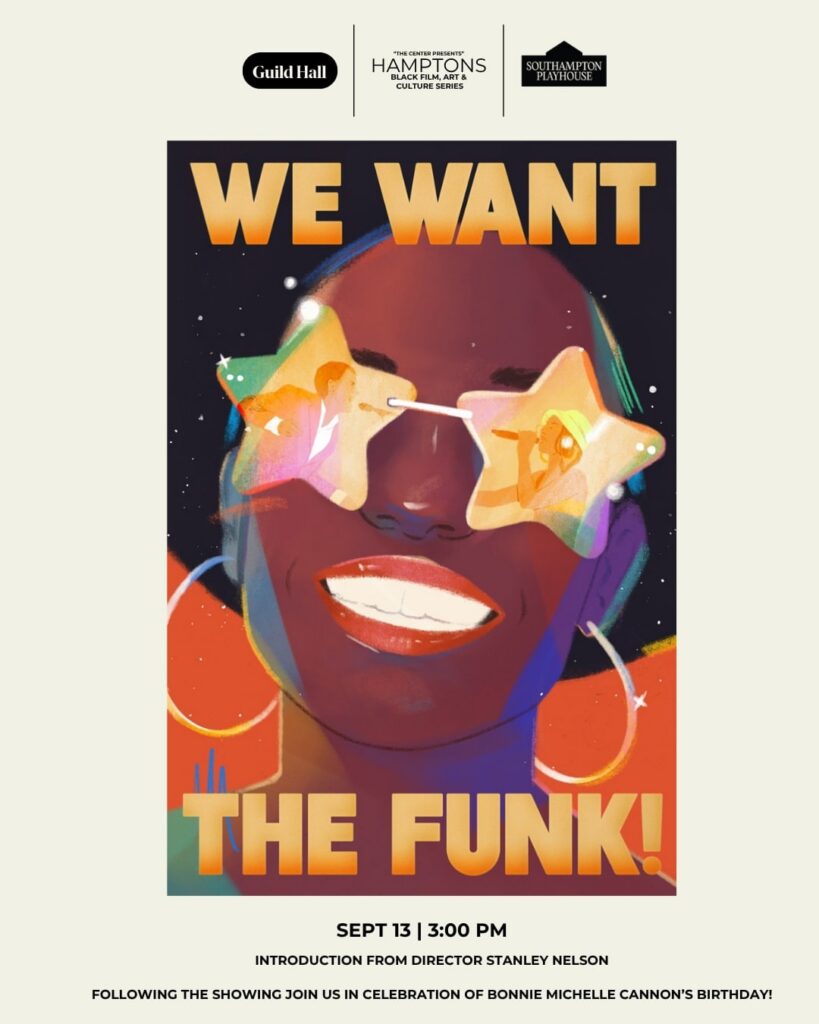
Michelle “Bonnie” Cannon

Michelle Bonnie Cannon has been the Executive Director since 2007. Seventeen years of showing up. Seventeen years of advocating, persuading, fundraising, and building relationships that keep this Center strong.

Bonnie should teach a masterclass in networking and the art of persuasion. Not the slick kind. The kind rooted in purpose. The kind that makes people want to stay involved because they understand the why.

The Board helps guide that mission forward. Led by Board Chairwoman Dr. Florence Rolston, alongside Vice President Dan Rattiner, Jerlean Hopson, Arlean Van Slyke, Crystal Brown, Susan Lazarus Reimen, former New York State Assemblyman Fred Thiele, Minister Jerome Walker, and Rev. Tisha Dixon Williams, this is a board grounded in lived experience, civic leadership, faith, and deep community roots.

Camryn Highsmith

And then there is the staff, the people who make this work real every single day. Jenna Solis keeps the operation moving with intention and care. Camryn Highsmith supports teens and families navigating college readiness and life transitions. Gloria Cannon runs a food pantry that has become a lifeline when SNAP benefits disappear overnight. Ella Engle Snow tends the Soul Garden. Faith Evans brings creativity into the classroom. Educators, drivers, outreach workers, artists, and mentors show up daily because they care enough to do the work.

Over the coming months, I will be spotlighting many of these individuals more deeply because their stories deserve to be told.

Strong institutions do not stand alone.

One of the most meaningful partnerships supporting the Center is with Wölffer Estate Vineyard. Through the annual Lighting of the Vines fundraiser, hosted by co-owner Joey Wölffer, vital funds are raised to support underserved families across the East End. Joey also serves on the Center’s advisory board, lending her voice, visibility, and commitment to community wellness.

Lighting of the Vines fundraiser at Wölffer Estate Vineyard. Photo by Kurt H. Leggard

This is what authentic philanthropy looks like when it is rooted in relationships, not optics.

Here is the part people often forget. The need does not end after the holidays. Hunger does not take a summer break. Kids do not stop needing support when school lets out. The Center operates year-round, and so does the need.

Year-round donations keep the food pantry stocked, the literacy programs running, the mentors available, and the lights on. Year-end gifts help the Center prepare to meet the needs of the community with strength and stability so it can respond when families need support most. This is not charity. This is an investment in people.

If you are reading this and thinking this does not affect you, I promise you that it does.

Strong communities do not happen by accident; they happen because places like this exist. Places that feed families, teach children, support teens, and create safe spaces for hard conversations. They show up when systems fail.

This Center helped my family, more importantly, it helps families every single day who may not have another option.

That is why it matters.
This is why it deserves attention, support, and year-round commitment.

Ribbon Cutting of the new building, Governor Kathy Hochul, 2023, photo Kurt H. Leggard

Real talk, real people. This is what community looks like when it works.

Real Talk, Real People. Real Needs. Real Action. Real Solutions. Two years of work led to this moment. Countless meetings. More than twenty speakers. And one room filled, by the end, with relief, pride, gratitude, and joy.

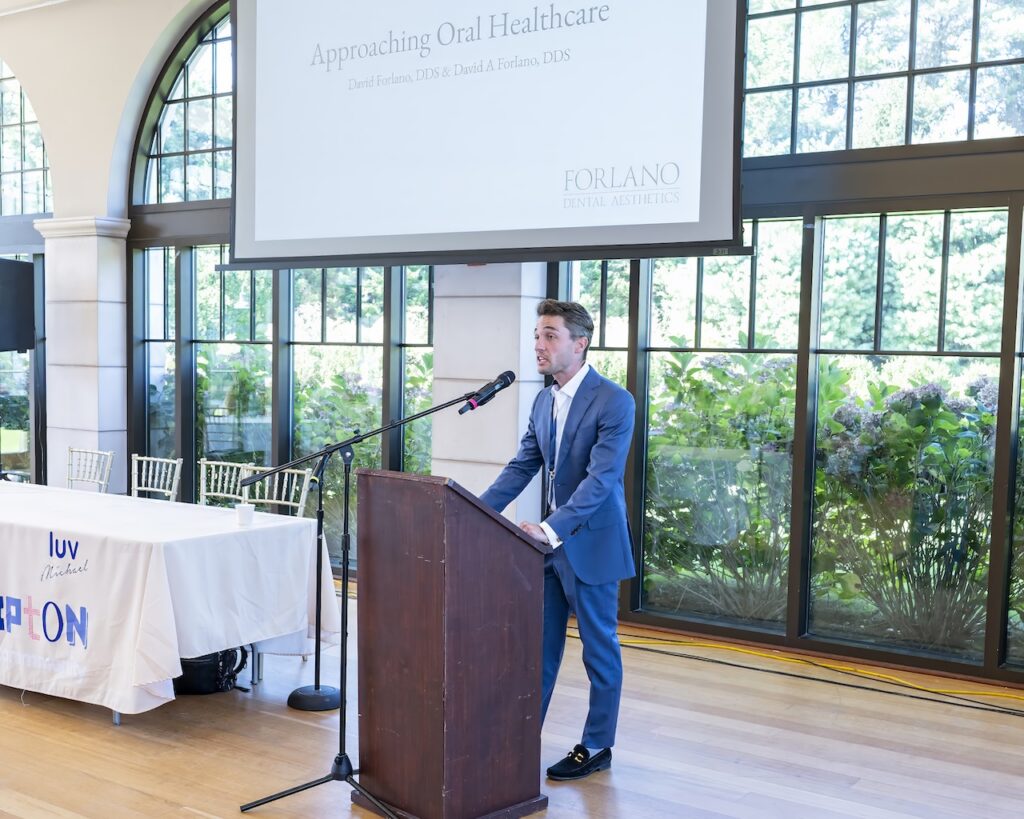
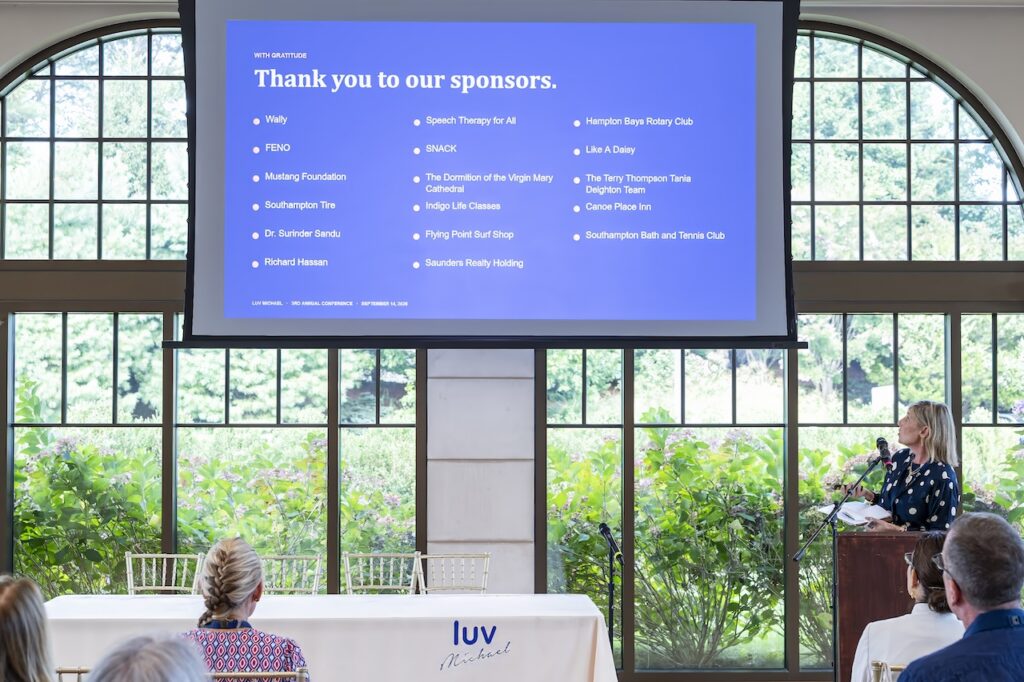
This week, the Town of Southampton approved funding for Luv Michael Homes, a decision that quietly yet profoundly changed lives for families whose deepest fear is a question most of us never have to ask. Who will care for my child when I can no longer?

Luv Michael serves an underserved and often overlooked community. Adults living on the autism spectrum and with developmental disabilities deserve housing, dignity, independence, and belonging.

For parents of children with disabilities, caregiving has no off switch. It is twenty-four hours a day, every day, for life. As parents grow older, the fear sharpens.

  • Where will my child live?
  • Who will protect them?
  • Who will truly see them?

These are not hypothetical questions. They are lived realities.

I live in privilege. I have two healthy daughters, and I still worry about them. I worry about their safety, their futures, and their happiness. That awareness made this moment even more powerful. I cannot imagine loving your child just as fiercely while knowing they will always need support and wondering who will step in when you no longer can. That is why Luv Michael matters.

Luv Michael does not simply provide housing. Luv Michael builds community. Residents live independently with support. They work. They form friendships. They worship. They train. They compete. They celebrate milestones. They belong. They are not hidden away. They are part of Southampton. In a region where housing costs have pushed most group homes out of reach, what Luv Michael has created is rare and essential.

Photo credit: Kurt Leggard

One of the best days I had this year was spent with the staff, residents, and families of Luv Michael at Surfers Healing. Luv Michael partners with Surfers Healing, a nonprofit that brings legendary surfers and volunteers together to give autistic children and adults one perfect day at the beach.

That day was exactly that.

Photo credit: Kurt Leggard

Parents who live with constant worry watched their children rise on the waves with confidence and joy. Volunteers cheered. Families laughed. Fear softened, even if only for a day. It was healing.

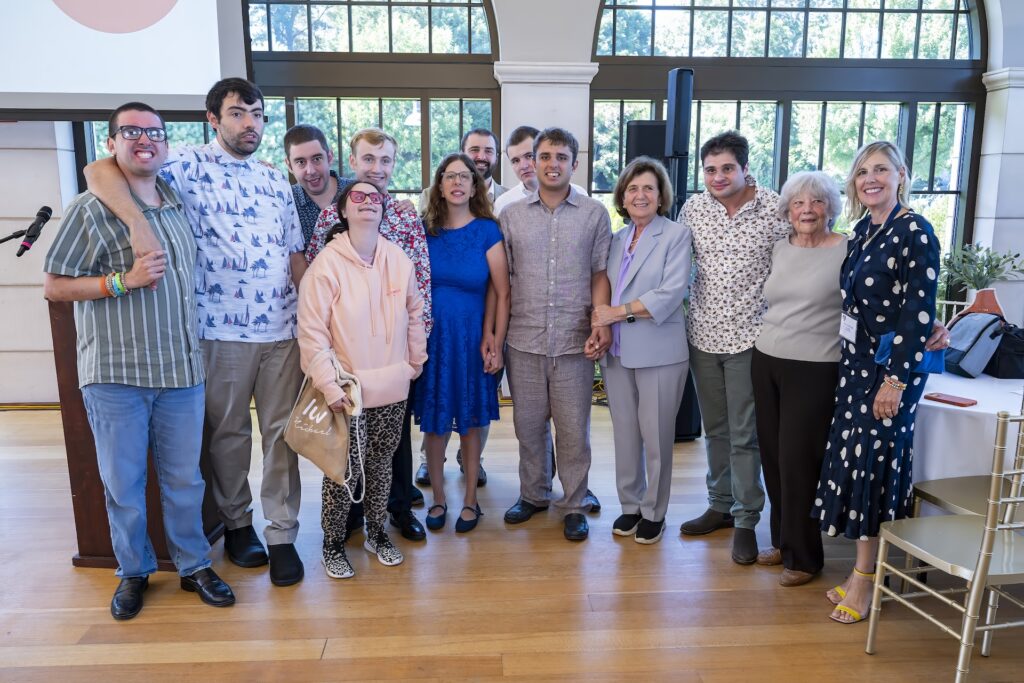
During the public hearing, resident Jenna stood up and spoke for herself. She said that Luv Michael changed her life for the better. She talked about coming to Southampton for the first time and feeling something immediately.

She said that the moment she visited, she knew this was a community she wanted to be part of and that she did not want to leave.

Jenna spoke about the people around her. She talked about loving the people she lives with and grows with every day. She spoke about the support she receives and the friendships she has made.

She shared her pride in what she has accomplished. She talked about competing in races, being hugged and cheered on, and earning two gold medals. She spoke about her job and how meaningful it is to her, as well as her love for working with the Southampton Playhouse.

Most of all, Jenna wanted the Town Board to hear directly from her. She spoke about lifelong friendships, about feeling welcomed, and about how incredible this life feels to her now. She told them she felt it was important for them to hear it from her.

And the room listened.

At Surfers Healing, I met Jenna’s parents. They shared something that put everything into perspective. Before Luv Michael, Jenna was quiet and timid. She held back. She stayed small.

Watching her now, living independently, making friends, inspiring others, and surfing in the ocean, they told me this life feels like a dream they were never sure they would see.

I saw Jenna’s father again yesterday. What made me happiest was watching him watch her. Watching his pride. Watching his joy. Watching his relief as his daughter continues to grow and flourish. full gallery click here:

That kind of transformation does not happen by accident. It happens because support exists. It happens because the community exists. It happens because belief exists.

More than twenty people spoke that night. Parents. Residents. Faith leaders. Advocates. Caregivers. They spoke about independence. About dignity. About fear turning into hope. About stability and belonging. As each person stood, the energy in the room shifted. This was not about policy alone. This was about humanity.

By the end, the room was elated. People were smiling. Some were emotional. There was a shared sense that something meaningful had been accomplished together.

This project was two years in the making. It required perseverance, collaboration, and trust between Luv Michael, the Community Housing Fund Advisory Board, town leadership, and families who never stopped advocating. The approval ensures long-term affordability and stability for a home serving adults on the autism spectrum. It provides something families rarely get: Peace of mind.

A community is measured by how it cares for its most vulnerable members. This decision shows what happens when real people speak honestly about real concerns and leaders respond with compassion and action.

Luv Michael is not just a housing model. It is a promise. A promise to families. A promise to residents. A promise that no one will be forgotten.

Real talk. Real people. Real concerns. Real problems. Real action. Real solutions.

And this week, Southampton delivered.