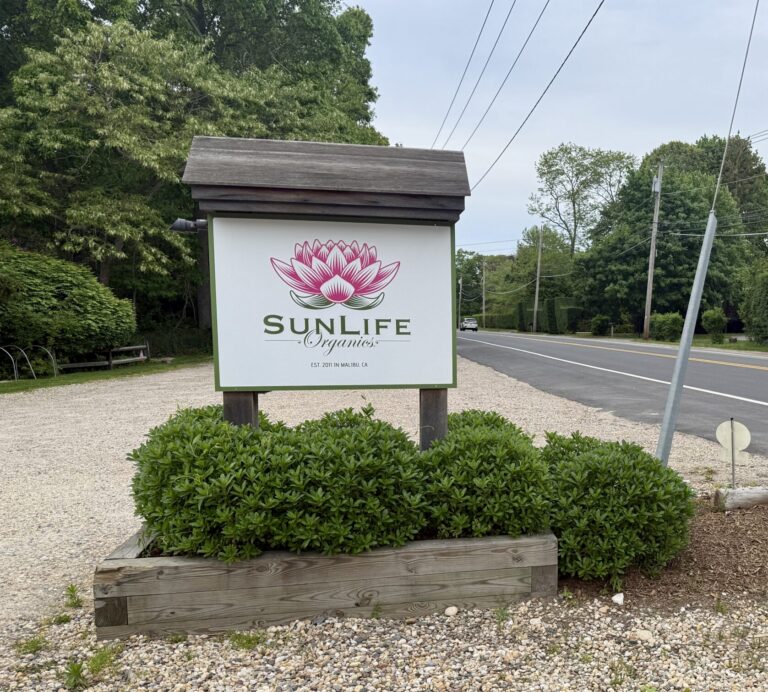
SunLife Organics officially opened its doors in Sag Harbor, and if social media is any indication, people already have opinions.
The arrival of SunLife Organics has generated excitement, curiosity, and a healthy dose of skepticism from some locals. That reaction is not surprising. Sag Harbor residents have always been protective of the businesses that give the village its unique character. When a company with more than 20 locations nationwide moves into town, questions are bound to follow. The biggest question I keep hearing is simple: Is SunLife Organics a corporation? Founder Khalil Rafati says no.
During a recent conversation, Rafati addressed the criticism head-on. He explained that SunLife Organics does not operate like a traditional corporate chain. There is no corporate office, no assistant managing his schedule, and no executive team filled with business school graduates. Rafati describes the company as a mission-driven business built around community, wellness, and human connection.
That may sound surprising considering the growth of SunLife Organics, which now has locations across the country. Rafati acknowledges the contradiction. He understands why people see multiple locations and assume “corporate chain.” He simply believes the label does not reflect the culture he has worked to create.
The story behind SunLife Organics is part of what makes the brand different. Rafati openly shares his journey from addiction, homelessness, and incarceration to building a nationally recognized wellness company. He says the original goal was never to build an empire. The goal was to create the kind of place he personally wanted to visit. He envisioned a welcoming space where people could gather, enjoy high-quality organic food, and connect with one another.
That philosophy appears to be influencing the Sag Harbor location in a significant way. One of the most interesting aspects of the new SunLife Organics location is its decision to preserve part of what residents loved about Estia’s Little Kitchen. Rafati hired several former Estia’s employees and introduced fresh prepared food offerings, marking the company’s first venture into a full kitchen operation. Unlike other SunLife locations that focus primarily on smoothies, bowls, and wellness beverages, the Sag Harbor location is experimenting with something new.
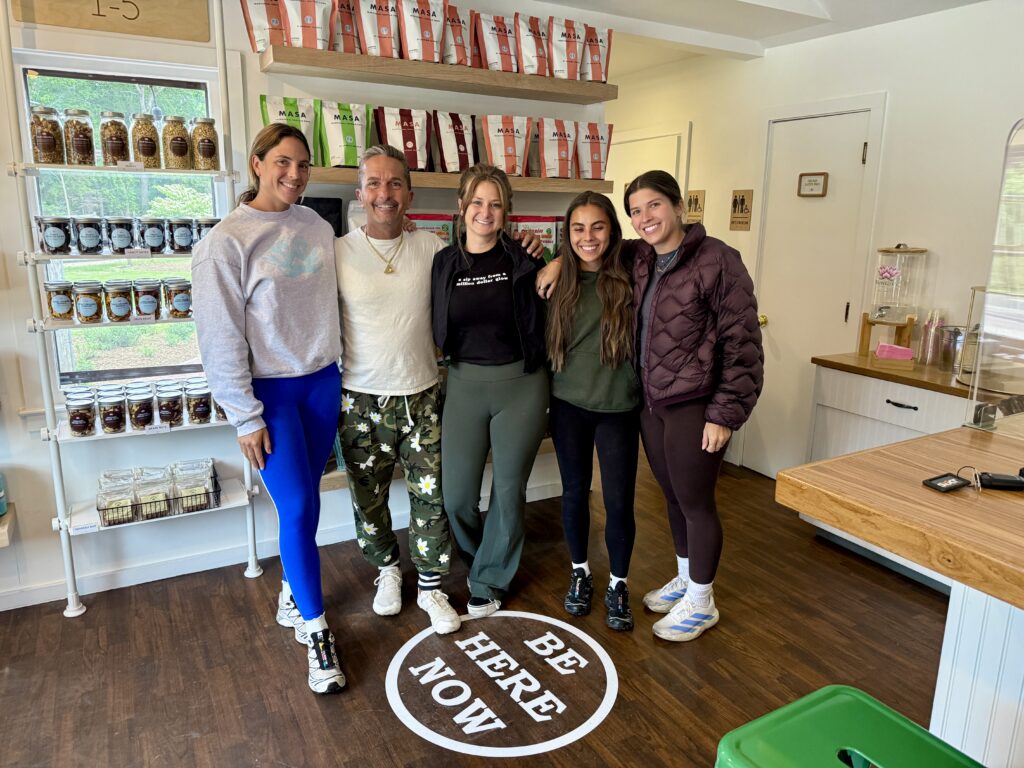
That decision was intentional. Rafati said he wanted to honor the tradition of what existed in the space before. The menu will likely become one of the most talked-about aspects of SunLife Organics in Sag Harbor. Local residents have strong opinions when it comes to food. The former Estia’s customer base was loyal, passionate, and deeply connected to the restaurant. Replacing that kind of community institution is never easy. The space itself is also generating conversation. Visitors immediately notice the crystal wall and the large “Be Here Now” message displayed inside the store. For Rafati, those elements are more than design features. He describes them as reminders to slow down, put away distractions, and connect with the people around us. Whether you embrace that philosophy or roll your eyes at it, the message is certainly getting people talking. The outdoor space may end up becoming one of the location’s biggest assets. The property feels less like a quick stop for a smoothie and more like a gathering place. Community events, wellness programming, live music, and neighborhood meetups all seem like natural possibilities if the brand chooses to lean into the local culture.
The future of SunLife Organics in Sag Harbor may ultimately come down to one thing: community acceptance. Residents embraced Estia’s because it felt authentic. It felt local. It felt like Sag Harbor. The question now is whether SunLife Organics can create that same sense of belonging while carrying the baggage that often comes with being a nationally recognized brand.
Personally, I find the conversation fascinating. Many people will continue to argue that a company with more than 20 locations is, by definition, a corporation. Khalil Rafati would strongly disagree. His argument is that culture matters more than size.
Time will tell which perspective resonates most with Sag Harbor. One thing is certain. The village is watching. Real Talk. Real People. What do you think?
Will Sag Harbor embrace SunLife Organics the way it embraced Estia’s?
Real Talk. Real People. Real Impact. While others talk, we are asking what matters.
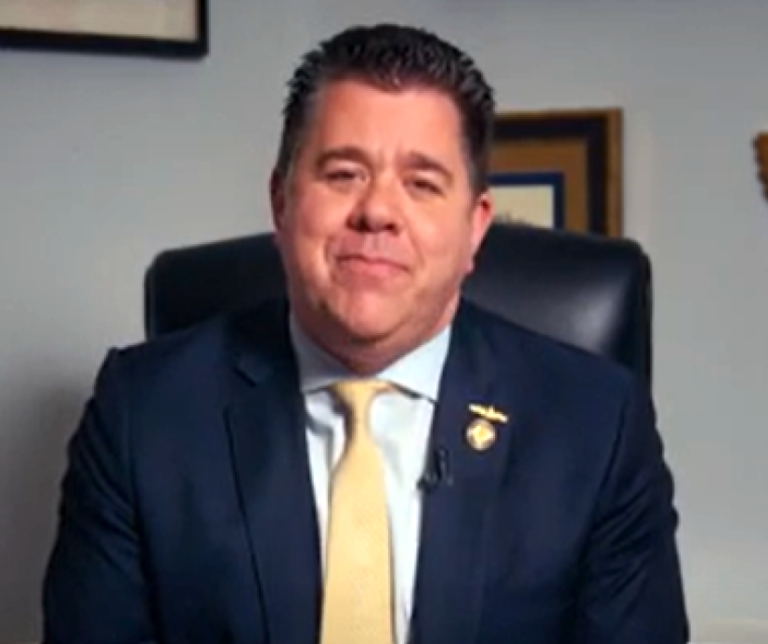
There is something about a Nick LaLota town hall conducted over the phone that already feels filtered. There is no room, no crowd, no raised hands, and no real-time accountability. Instead, there is a voice, an operator, and a promise that questions will be taken from constituents.
What Actually Happened
During the recent Nick LaLota town hall, constituents were told that questions would not be cherry-picked. However, the structure of the call suggested otherwise. Participants were required to submit their questions through an operator, who then decided which questions would be asked. This process creates a level of control that is not present in traditional, in-person town halls.
Delays and Priorities
One of the most noticeable aspects of the Nick LaLota town hall was the delay before the discussion truly began. The call appeared to wait until thousands of participants had joined, suggesting that the number of listeners was a priority. By the time the conversation gained momentum, the available time for meaningful engagement had already been reduced.
Time and Cost Concerns
At one point during the Nick LaLota town hall, a comment was made about the cost associated with extending the call. This raised an important question about priorities. If this format replaces in-person town halls, then time should be allocated to ensure that as many constituent questions as possible are addressed, regardless of cost.
The Question That Was Not Asked
A key concern during the Nick LaLota town hall was that certain questions were not addressed at all. One such question focused on votes against federal spending bills that included funding for housing and environmental programs. This question directly relates to issues affecting Long Island residents, including housing affordability and water quality.
Local Impact on the East End
The issues raised but not addressed during the Nick LaLota town hall are not abstract policy debates. Housing affordability continues to be a pressing concern, workforce housing remains limited, and environmental issues, including water quality, are ongoing challenges. These are real problems that require direct and transparent responses.
Government Shutdown Reality
The Nick LaLota town hall also included a discussion about government shutdowns and their impact. Workers from the Transportation Security Administration continue to report to work during shutdowns, often without immediate pay. This creates financial strain and uncertainty for thousands of essential workers.
Statements on Shutdowns
During the Nick LaLota town hall, the Congressman stated that shutting down the government is short-sighted and harmful, particularly for TSA employees. This statement reflects a widely recognized reality, as shutdowns disrupt lives and services without producing consistent long-term policy outcomes.
Assigning Blame
The Nick LaLota town hall also included the assertion that Democrats are responsible for government shutdowns. However, shutdowns typically occur when multiple branches of government fail to reach an agreement. Responsibility is shared across parties and institutions, making the situation more complex than a single point of blame.
The ICE Discussion
Another topic raised during the Nick LaLota town hall involved immigration enforcement. It was stated that Immigration and Customs Enforcement continues operating during shutdowns. While this is partially accurate, ICE benefits from different funding structures, while agencies such as TSA experience more immediate financial impacts.
The Epstein Files Exchange
A more serious moment during the Nick LaLota town hall occurred when a constituent asked about the Epstein files. The Congressman expressed support for transparency, accountability, and the protection of victims. He emphasized that anyone involved in wrongdoing should be held accountable, while also ensuring that victims are not retraumatized.
Transparency and Accountability
The response to the Epstein question during the Nick LaLota town hall demonstrated that when substantive questions are asked, substantive answers can follow. However, this also highlights the importance of ensuring that all relevant questions are allowed to be addressed.
The Bigger Picture
The overall structure of the Nick LaLota town hall raises broader concerns about access and accountability. When questions are filtered and time is limited, the conversation becomes controlled. This limits the ability of constituents to engage directly on issues that matter most to their communities.
Real Talk
The Nick LaLota town hall format makes it difficult to reconcile claims of transparency with a system that screens questions. Waiting for thousands of participants to join, while limiting the number of questions answered, creates a disconnect between access and engagement.
Final Thought
The Nick LaLota town hall included a statement that compromise is necessary in government. While that may be true, meaningful compromise begins with open and honest dialogue. Dialogue, in turn, requires listening to constituents without filtering or limitation.
Real Talk. Real People. Real Impact.
👉 If your question was not asked during the Nick LaLota town hall, what would you have wanted to say?
Real Talk. Real People. Real Community. If you live in Sag Harbor, you feel it every day. The storefronts change. New businesses arrive. Familiar places disappear. And while growth can be exciting, it can also feel unsettling when the town you love starts to look different. In the middle of all that change, Sag Harbor Pharmacy remains a place that still feels like home.
A Constant in a Town That Keeps Evolving
Sag Harbor is not frozen in time, and no one expects it to be. But there is comfort in knowing that some places still understand the heart of the village. Sag Harbor Pharmacy is one of those places. It serves the people who live here year-round, not just the summer crowds, and that consistency matters more than ever right now.
Built From the Ground Up, Not From a Boardroom
The story behind Sag Harbor Pharmacy is rooted in real work. Owner Tarique Chaudhary did not enter pharmacy through a corporate office. He learned it from the ground up, sweeping floors, stocking shelves, managing inventory, and working every role imaginable alongside his father, a pharmacist. That hands-on experience shaped how he runs Sag Harbor Pharmacy today.
A Thoughtful Decision to Invest in Sag Harbor
Buying Sag Harbor Pharmacy was not a snap decision. It was a careful, intentional choice discussed over time with his wife. Tarique had already spent decades working on the East End and understood the seasonal rhythm of life here. He saw Sag Harbor Pharmacy not as a short-term opportunity, but as a long-term commitment to the community.
Why Owning the Building Was About Stability
Anyone watching Main Street knows how fragile small businesses can be when leases change and rents rise. When the opportunity came to purchase the building that houses the Pharmacy, Tarique did not hesitate. Owning the building was about protecting the pharmacy’s future and ensuring it would not be forced out of the place it has called home for over a century.
Your Pharmacy for Life. Your Pharmacy Year-Round.
One thing sets Sag Harbor Pharmacy apart. It is not built around trends or tourism. It is built around the people who live here all year. Over-the-counter medications, vitamins, household essentials, shampoos, soaps, and everyday needs are stocked with intention. Pricing stays fair and competitive. Sag Harbor Pharmacy is your pharmacy for life, your pharmacy year-round.
Familiar Faces in an Impersonal World
Healthcare is personal, and Sag Harbor Pharmacy treats it that way. Customers are not numbers. They are neighbors. Pharmacists are approachable, questions are welcomed, and service is fast and accurate. In a world of mail-order medicine and long waits, this pharmacy offers something simple and powerful: human connection.
Adapting Without Losing the Soul
Change does not mean losing identity. Sag Harbor Pharmacy is expanding services thoughtfully, including vaccines, clinical care, and a new compounding lab in development for dermatology, hormone therapy, and veterinary medications. These updates allow the pharmacy to meet modern needs while staying deeply rooted in the community.
Modern Updates With a Hometown Feel
Behind the scenes, workflow improvements have already modernized the pharmacy area at Sag Harbor Pharmacy. Next comes a refresh of the front end, with new lighting, shelving, and design elements that brighten the space while preserving its old-school, hometown pharmacy vibe. The goal is not to erase history, but to honor it.
Why Sag Harbor Pharmacy Matters Right Now
As Sag Harbor continues to evolve, places like Sag Harbor Pharmacy remind us what community looks like when it is cared for intentionally. It is steady. It is familiar. It is here in every season. In a town that is changing, this local pharmacy still feels like home.
Real talk, real people. There are places in a community that quietly hold everything together, they do not shout, they do not posture, they do not ask for applause, but if they disappeared tomorrow, people would feel it immediately. If the Center were not here schools would feel it, families would feel it, and kids would feel it. The Bridgehampton Child Care & Recreational Center is one such place.
I recently spent time back at the Center, walking the halls, talking with staff, and watching kids move comfortably from homework to art to conversation. I watched them settle in, laugh, ask questions, and just exist without fear of being rushed or judged. I will be honest, I left more emotional than I expected.
This is not because I do not already understand how important this place is. I do. It is because sometimes you forget just how much weight one organization can carry for an entire community until you are standing in it again.
Afterschool Program
This place is personal for me
Let me make this real.
My youngest took advantage of programs at the Center, including SAT prep courses. If you have ever lived through SAT season as a parent, you already know exactly what that looks like. It is stress layered on stress. It is pressure sneaking into dinner conversations. It is late nights that turn into early mornings. It is questioning every parenting decision you have ever made while Googling practice tests far too late at night.
The Center stepped in and helped carry that load. Academically, yes, but just as importantly, emotionally and financially, because it is never just about the test. It is about confidence. It is about telling a child that they belong in the room, that they are capable, and that they are not behind simply because they need support. That kind of support does not always make headlines, but it changes lives quietly and permanently.
This is not childcare. This is community care.
The Bridgehampton Child Care and Recreational Center is a historically Black, community-based organization serving all marginalized children and families on the East End. That history matters. The issues of mission and the way it shows up every single day matter even more. Let me be clear.
This is not babysitting. This is not filler programming. This is not checking a box.
This is food security when families suddenly lose access to SNAP benefits. This is literacy support when children are struggling to read and falling through the cracks. This is mentorship when teens are trying to understand who they are in a world that rarely slows down long enough to guide them. Real talk, real people. These are real needs being met in real time.
If there is one place where everything connects, it is the After-School program.
This is not a holding pen for kids waiting to be picked up. This is a thoughtfully designed space built around structure, care, and growth. Under the leadership of Robert King, the After School Program Director, afternoons are intentional.
Robert King & Jenna Solis
Kids arrive and start with homework, not as punishment, but as support. Students who need extra help receive tutoring and one-on-one guidance. Kids who do not have assignments that day are not ignored or sidelined. They are engaged in enrichment that builds skills, curiosity, and confidence.
Learning here is layered. Math shows up in cooking and measurements. Reading turns into discussion and storytelling. Critical thinking comes alive through art, group projects, and hands-on activities. Programming adapts to different age groups so younger children feel nurtured while older kids feel respected and challenged.
There are clubs, rotating activities, and real-world exposure that many children would not otherwise experience. Photography, Gardening, Art, Cooking demonstrations, Horseback riding, and Restaurant outings that teach independence and confidence. These are not extras. They are part of learning how to move through the world.
And just as important as the programming is consistency. Kids know who will be there when they walk through the door. They know they are safe. They know they will be seen and heard. That stability allows them to exhale and grow at the same time. That is the difference between supervision and support. And that difference matters.
Literacy for children and adults changes everything
The literacy programs alone deserve attention. Reading is not just about words on a page. Literacy is access. Literacy is confidence. Literacy is the difference between struggling silently and being able to advocate for yourself later in life.
And this work does not stop with children.
Adult literacy programs are just as critical. Parents and caregivers need tools to navigate schools, jobs, healthcare systems, and everyday paperwork with dignity and confidence. When families are empowered together, the impact multiplies. When a child or an adult learns to love reading, doors open that can never be closed again.
Creating space for conversations that matter
One of the programs that truly stopped me in my tracks is Brothers in Dialogue, an ongoing quarterly virtual series continuing through 2026.
This program creates a safe and affirming space for boys and men, from high school students to elders, to talk honestly about identity, accountability, and community. No pretending. No posturing. Just a real conversation.
We do not talk enough about how rare that is or how necessary it is. If we want healthier communities, we have to create spaces where boys and men can speak openly and be heard. This program does exactly that.
Leadership that actually leads because none of this happens by accident.
Michelle “Bonnie” Cannon
Michelle Bonnie Cannon has been the Executive Director since 2007. Seventeen years of showing up. Seventeen years of advocating, persuading, fundraising, and building relationships that keep this Center strong.
Bonnie should teach a masterclass in networking and the art of persuasion. Not the slick kind. The kind rooted in purpose. The kind that makes people want to stay involved because they understand the why.
The Board helps guide that mission forward. Led by Board Chairwoman Dr. Florence Rolston, alongside Vice President Dan Rattiner, Jerlean Hopson, Arlean Van Slyke, Crystal Brown, Susan Lazarus Reimen, former New York State Assemblyman Fred Thiele, Minister Jerome Walker, and Rev. Tisha Dixon Williams, this is a board grounded in lived experience, civic leadership, faith, and deep community roots.
Camryn Highsmith
And then there is the staff, the people who make this work real every single day. Jenna Solis keeps the operation moving with intention and care. Camryn Highsmith supports teens and families navigating college readiness and life transitions. Gloria Cannon runs a food pantry that has become a lifeline when SNAP benefits disappear overnight. Ella Engle Snow tends the Soul Garden. Faith Evans brings creativity into the classroom. Educators, drivers, outreach workers, artists, and mentors show up daily because they care enough to do the work.
Over the coming months, I will be spotlighting many of these individuals more deeply because their stories deserve to be told.
Community partnerships that matter
Strong institutions do not stand alone.
One of the most meaningful partnerships supporting the Center is with Wölffer Estate Vineyard. Through the annual Lighting of the Vines fundraiser, hosted by co-owner Joey Wölffer, vital funds are raised to support underserved families across the East End. Joey also serves on the Center’s advisory board, lending her voice, visibility, and commitment to community wellness.
Lighting of the Vines fundraiser at Wölffer Estate Vineyard. Photo by Kurt H. Leggard
This is what authentic philanthropy looks like when it is rooted in relationships, not optics.
Why year-round support matters
Here is the part people often forget. The need does not end after the holidays. Hunger does not take a summer break. Kids do not stop needing support when school lets out. The Center operates year-round, and so does the need.
Year-round donations keep the food pantry stocked, the literacy programs running, the mentors available, and the lights on. Year-end gifts help the Center prepare to meet the needs of the community with strength and stability so it can respond when families need support most. This is not charity. This is an investment in people.
Why you should care
If you are reading this and thinking this does not affect you, I promise you that it does.
Strong communities do not happen by accident; they happen because places like this exist. Places that feed families, teach children, support teens, and create safe spaces for hard conversations. They show up when systems fail.
This Center helped my family, more importantly, it helps families every single day who may not have another option.
That is why it matters. This is why it deserves attention, support, and year-round commitment.
Ribbon Cutting of the new building, Governor Kathy Hochul, 2023, photo Kurt H. Leggard
Real talk, real people. This is what community looks like when it works.
Because apparently, she needed more attention in 2025
If you read my last thyroid update, “Taming My Drama Queen Thyroid,” you already know my thyroid does not do subtle. She is dramatic. She is demanding. She thrives on chaos. She absolutely believes the world revolves around her.
Well, she’s back. And she brought snacks. Just not the ones I’m allowed to eat.
Yes, my Graves’ disease has made a return appearance in 2025. This time, it wasn’t loud panic or obvious symptoms. It was sneaky. My TSH dropped very low, even though I wasn’t feeling completely unhinged. But I was feeling off. And when you live with thyroid disease, “off” is your early warning system.
The Symptoms Were Quiet but Persistent
This round was less fireworks, more slow burn.
I was dealing with bloating, disrupted sleep, exhaustion that made no sense, increased anxiety, and certain food triggers that suddenly felt like they were personally attacking me. Nothing extreme on its own, but together it was enough for me to say, “Something is not right.”
I listened. I called my doctor. And here we are.
Back on Medication (Again)
Yes, I am back on my medication, methimazole, and I am already beginning to feel better. There is no shame in that. There is no failure in needing help. Thyroid disease is not something you power through. It is something you manage, sometimes for life.
Let me say this clearly: Medication is not the enemy. Ignoring your body is.
Welcome Back to the Low-Iodine Diet
And now for the part that hurts the most.
I am officially back on a restricted low-iodine diet, which is about as fun as it sounds. Think of it as a cleanse, but without the joy or the bragging rights.
This means:
Limited coffee (cruel and unusual punishment)
No alcohol (I have thoughts about this)
No dairy
No gluten
No shellfish
No sea salt
And honestly, no joy in the snack aisle
Basically, none of the good stuff. If it tastes amazing, I probably cannot have it. If it brings happiness, it’s suspicious.
Between the medication and the diet, my thyroid has turned my life into a very beige experience. But I remind myself that this is temporary, intentional, and necessary.
What This Round Taught Me
Because thyroid disease always has a lesson:
Remission does not mean the story is over.
Symptoms do not have to be dramatic to be important.
Lab numbers matter, but so does how you feel.
Food can absolutely trigger symptoms, even when labs look “almost fine.”
Listening early beats fixing things later.
Most importantly, I learned again that your body whispers before it screams. If you pay attention early, you can often avoid the worst of it.
Why I’m Sharing This
Because too many people, especially women over 40, brush things off as stress, menopause, burnout, or just life. Sometimes it is life. And sometimes it is your thyroid quietly flipping the table.
Real talk: If something feels off, trust yourself. If your labs are “borderline,” push for answers. If you need medication again, take it. If you need to eat like a monk for a while, complain, but do it anyway.
There is strength in paying attention. There is power in early action. And there is freedom in telling the truth, even when that truth is:
“My thyroid is being a diva again, and I am on a diet I did not choose.”
What I’m Doing Now
Right now, I am focusing on:
Medication consistency
A restricted low-iodine diet, even though I miss everything
Limiting coffee and alcohol (send encouragement)
Eating foods that support healing, not chaos
Sleeping like it is my full-time job
Regular labs and doctor check-ins
Giving myself grace instead of guilt
Because healing is not linear. It is layered. And sometimes it is deeply inconvenient.
My thyroid may be a drama queen, but I am still in charge. She can have the spotlight. I run the show.