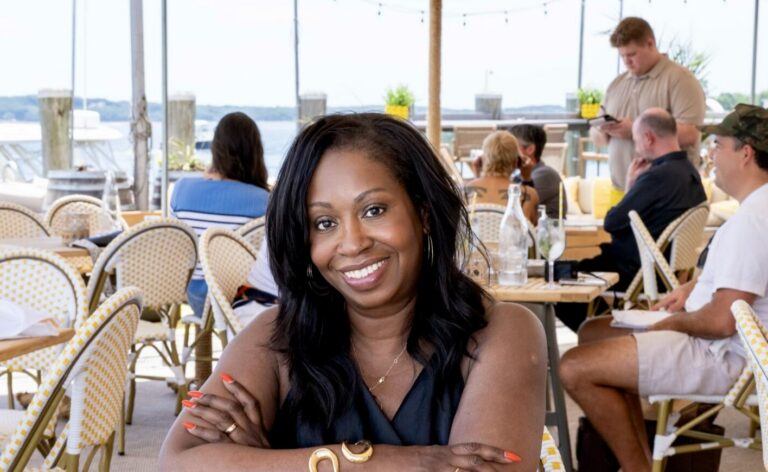
Author

Vanessa Leggard

Browsing

The MetroCard is officially on life support and New Yorkers are being pushed into the future whether we are ready or not. OMNY is rolling out everywhere and fares across the MTA are shifting on January 4, 2026. Translation: tap your phone, tap your card, or check your pulse because the transportation world is changing and we all need a minute to adjust.

Below is what stays, what goes, and how to avoid donating extra money to the MTA out of confusion, exhaustion, or poor planning.

MetroCards are fading and OMNY is stepping in.
An OMNY card costs 2 dollars and can last up to five years.
MetroCards were iconic but let’s be honest, half of them bent like wet noodles and the other half demagnetized if you blinked too fast.
We are moving on, whether we feel emotionally ready or not.

Base fare: 2.90 becomes 3 dollars
Reduced fare: 1.45 becomes 1.50
Express bus: 7 becomes 7.25
Single Ride: 3.25 becomes 3.50

Still cheaper than a cold Uber at midnight during a rainstorm and less stressful than parking anywhere south of 96th Street.

Once you pay for 12 subway or local bus rides in a week, the rest is free.
Weekly max: 35 dollars, or 17.50 for reduced fare riders.

Express bus riders max out at 67 dollars a week.
Finally, something that rewards showing up, even if life tries to throw us off the tracks.

Monthly and weekly tickets increase up to 4.5 percent.
Other tickets increase up to 8 percent.
Peak CityTicket becomes 7.25 and off peak becomes 5.25.
Monthly passes stay under 500 dollars which is the MTA version of a warm hug.

Here is the painful part.
If you buy a ticket on the train, the surcharge jumps from $2 – $8 dollars.
That is lunch money, half a manicure, or enough to make you rethink your entire life. If you bought a digital ticket but did not activate it before boarding same $8 dollar on board fee because apparently forgetting counts as a luxury service. Moral of the story
open the app before you sit down or hand over $8 dollars for the privilege of being unprepared.

Round trip tickets are gone.
Now you get a Day Pass offering unlimited travel until 4 am the next day.

On weekdays it costs about 10 percent less than two peak tickets.
On weekends it matches two off peak tickets.

But here is the real talk
Before tapping, ask yourself one question
“Am I absolutely taking that return trip today?”

Yes. Absolutely.
Cash users are still in the game.

For subways and buses you can load cash onto an OMNY card at vending machines or retail stores. Over 2,700 businesses accept cash to reload OMNY cards, including bodegas, pharmacies and grocery stores.

For LIRR and Metro North you can still buy tickets with cash at machines or ticket windows.
Just buy before boarding if you value your finances and your sanity, because that $8 dollar fee does not care about your journey.

You do not need one to travel.
Buy a paper ticket, or use an OMNY card you reload with cash.
Paper does not require charging, updating, or begging your phone to turn back on at 3 percent.

Not immediately.
Subway booth workers are being shifted into more customer support roles, helping with OMNY issues, directions and accessibility. They are still present, just less like box office staff and more like travel guides without the matching shirts.

On the LIRR and Metro North side, staffed booths will continue but likely fewer over time.
They are not disappearing overnight, but eventually seeing a ticket agent may feel like spotting rare wildlife joyful and confusing at the same time.

Children ages 5 through 17 ride for 1 dollar with a paying adult.
A tiny win for families who already deserve hazard pay.

All MTA tolls increase 7.5 percent for both E ZPass and Tolls by Mail.
Queens, Bronx and Staten Island residents keep their rebates.
We are paying more to sit in the same traffic. Nothing new. Growth requires acceptance.

Cash still works
No smartphone required
Booths are not disappearing just yet
Fares are rising a little
Fare caps help
On board fees are emotionally damaging but avoidable:
Activate your ticket before your butt hits the seat, NYC commuting remains exactly what it has always been, a daily workout for your patience, a test of your budgeting and a source of stories you will tell for the rest of your life.

Real talk, real people. There are places in a community that quietly hold everything together, they do not shout, they do not posture, they do not ask for applause, but if they disappeared tomorrow, people would feel it immediately. If the Center were not here schools would feel it, families would feel it, and kids would feel it. The Bridgehampton Child Care & Recreational Center is one such place.

I recently spent time back at the Center, walking the halls, talking with staff, and watching kids move comfortably from homework to art to conversation. I watched them settle in, laugh, ask questions, and just exist without fear of being rushed or judged. I will be honest, I left more emotional than I expected.

This is not because I do not already understand how important this place is. I do. It is because sometimes you forget just how much weight one organization can carry for an entire community until you are standing in it again.

Afterschool Program

Let me make this real.

My youngest took advantage of programs at the Center, including SAT prep courses. If you have ever lived through SAT season as a parent, you already know exactly what that looks like. It is stress layered on stress. It is pressure sneaking into dinner conversations. It is late nights that turn into early mornings. It is questioning every parenting decision you have ever made while Googling practice tests far too late at night.

The Center stepped in and helped carry that load. Academically, yes, but just as importantly, emotionally and financially, because it is never just about the test. It is about confidence. It is about telling a child that they belong in the room, that they are capable, and that they are not behind simply because they need support. That kind of support does not always make headlines, but it changes lives quietly and permanently.

The Bridgehampton Child Care and Recreational Center is a historically Black, community-based organization serving all marginalized children and families on the East End. That history matters. The issues of mission and the way it shows up every single day matter even more. Let me be clear.

This is not babysitting.
This is not filler programming.
This is not checking a box.

This is food security when families suddenly lose access to SNAP benefits. This is literacy support when children are struggling to read and falling through the cracks. This is mentorship when teens are trying to understand who they are in a world that rarely slows down long enough to guide them. Real talk, real people. These are real needs being met in real time.

If there is one place where everything connects, it is the After-School program.

This is not a holding pen for kids waiting to be picked up. This is a thoughtfully designed space built around structure, care, and growth. Under the leadership of Robert King, the After School Program Director, afternoons are intentional.

Robert King & Jenna Solis

Kids arrive and start with homework, not as punishment, but as support. Students who need extra help receive tutoring and one-on-one guidance. Kids who do not have assignments that day are not ignored or sidelined. They are engaged in enrichment that builds skills, curiosity, and confidence.

Learning here is layered. Math shows up in cooking and measurements. Reading turns into discussion and storytelling. Critical thinking comes alive through art, group projects, and hands-on activities. Programming adapts to different age groups so younger children feel nurtured while older kids feel respected and challenged.

There are clubs, rotating activities, and real-world exposure that many children would not otherwise experience. Photography, Gardening, Art, Cooking demonstrations, Horseback riding, and Restaurant outings that teach independence and confidence. These are not extras. They are part of learning how to move through the world.

And just as important as the programming is consistency. Kids know who will be there when they walk through the door. They know they are safe. They know they will be seen and heard. That stability allows them to exhale and grow at the same time. That is the difference between supervision and support. And that difference matters.

The literacy programs alone deserve attention. Reading is not just about words on a page. Literacy is access. Literacy is confidence. Literacy is the difference between struggling silently and being able to advocate for yourself later in life.

And this work does not stop with children.

Adult literacy programs are just as critical. Parents and caregivers need tools to navigate schools, jobs, healthcare systems, and everyday paperwork with dignity and confidence. When families are empowered together, the impact multiplies. When a child or an adult learns to love reading, doors open that can never be closed again.

One of the programs that truly stopped me in my tracks is Brothers in Dialogue, an ongoing quarterly virtual series continuing through 2026.

This program creates a safe and affirming space for boys and men, from high school students to elders, to talk honestly about identity, accountability, and community. No pretending. No posturing. Just a real conversation.

We do not talk enough about how rare that is or how necessary it is. If we want healthier communities, we have to create spaces where boys and men can speak openly and be heard. This program does exactly that.

Michelle “Bonnie” Cannon

Michelle Bonnie Cannon has been the Executive Director since 2007. Seventeen years of showing up. Seventeen years of advocating, persuading, fundraising, and building relationships that keep this Center strong.

Bonnie should teach a masterclass in networking and the art of persuasion. Not the slick kind. The kind rooted in purpose. The kind that makes people want to stay involved because they understand the why.

The Board helps guide that mission forward. Led by Board Chairwoman Dr. Florence Rolston, alongside Vice President Dan Rattiner, Jerlean Hopson, Arlean Van Slyke, Crystal Brown, Susan Lazarus Reimen, former New York State Assemblyman Fred Thiele, Minister Jerome Walker, and Rev. Tisha Dixon Williams, this is a board grounded in lived experience, civic leadership, faith, and deep community roots.

Camryn Highsmith

And then there is the staff, the people who make this work real every single day. Jenna Solis keeps the operation moving with intention and care. Camryn Highsmith supports teens and families navigating college readiness and life transitions. Gloria Cannon runs a food pantry that has become a lifeline when SNAP benefits disappear overnight. Ella Engle Snow tends the Soul Garden. Faith Evans brings creativity into the classroom. Educators, drivers, outreach workers, artists, and mentors show up daily because they care enough to do the work.

Over the coming months, I will be spotlighting many of these individuals more deeply because their stories deserve to be told.

Strong institutions do not stand alone.

One of the most meaningful partnerships supporting the Center is with Wölffer Estate Vineyard. Through the annual Lighting of the Vines fundraiser, hosted by co-owner Joey Wölffer, vital funds are raised to support underserved families across the East End. Joey also serves on the Center’s advisory board, lending her voice, visibility, and commitment to community wellness.

Lighting of the Vines fundraiser at Wölffer Estate Vineyard. Photo by Kurt H. Leggard

This is what authentic philanthropy looks like when it is rooted in relationships, not optics.

Here is the part people often forget. The need does not end after the holidays. Hunger does not take a summer break. Kids do not stop needing support when school lets out. The Center operates year-round, and so does the need.

Year-round donations keep the food pantry stocked, the literacy programs running, the mentors available, and the lights on. Year-end gifts help the Center prepare to meet the needs of the community with strength and stability so it can respond when families need support most. This is not charity. This is an investment in people.

If you are reading this and thinking this does not affect you, I promise you that it does.

Strong communities do not happen by accident; they happen because places like this exist. Places that feed families, teach children, support teens, and create safe spaces for hard conversations. They show up when systems fail.

This Center helped my family, more importantly, it helps families every single day who may not have another option.

That is why it matters.
This is why it deserves attention, support, and year-round commitment.

Ribbon Cutting of the new building, Governor Kathy Hochul, 2023, photo Kurt H. Leggard

Real talk, real people. This is what community looks like when it works.

Because apparently, she needed more attention in 2025

If you read my last thyroid update, Taming My Drama Queen Thyroid,” you already know my thyroid does not do subtle. She is dramatic. She is demanding. She thrives on chaos. She absolutely believes the world revolves around her.

Well, she’s back.
And she brought snacks.
Just not the ones I’m allowed to eat.

Yes, my Graves’ disease has made a return appearance in 2025. This time, it wasn’t loud panic or obvious symptoms. It was sneaky. My TSH dropped very low, even though I wasn’t feeling completely unhinged. But I was feeling off. And when you live with thyroid disease, “off” is your early warning system.

The Symptoms Were Quiet but Persistent

This round was less fireworks, more slow burn.

I was dealing with bloating, disrupted sleep, exhaustion that made no sense, increased anxiety, and certain food triggers that suddenly felt like they were personally attacking me. Nothing extreme on its own, but together it was enough for me to say, “Something is not right.”

I listened.
I called my doctor.
And here we are.

Back on Medication (Again)

Yes, I am back on my medication, methimazole, and I am already beginning to feel better. There is no shame in that. There is no failure in needing help. Thyroid disease is not something you power through. It is something you manage, sometimes for life.

Let me say this clearly:
Medication is not the enemy. Ignoring your body is.

Welcome Back to the Low-Iodine Diet

And now for the part that hurts the most.

I am officially back on a restricted low-iodine diet, which is about as fun as it sounds. Think of it as a cleanse, but without the joy or the bragging rights.

This means:

  • Limited coffee (cruel and unusual punishment)
  • No alcohol (I have thoughts about this)
  • No dairy
  • No gluten
  • No shellfish
  • No sea salt
  • And honestly, no joy in the snack aisle

Basically, none of the good stuff.
If it tastes amazing, I probably cannot have it.
If it brings happiness, it’s suspicious.

Between the medication and the diet, my thyroid has turned my life into a very beige experience. But I remind myself that this is temporary, intentional, and necessary.

What This Round Taught Me

Because thyroid disease always has a lesson:

  • Remission does not mean the story is over.
  • Symptoms do not have to be dramatic to be important.
  • Lab numbers matter, but so does how you feel.
  • Food can absolutely trigger symptoms, even when labs look “almost fine.”
  • Listening early beats fixing things later.

Most importantly, I learned again that your body whispers before it screams. If you pay attention early, you can often avoid the worst of it.

Why I’m Sharing This

Because too many people, especially women over 40, brush things off as stress, menopause, burnout, or just life. Sometimes it is life. And sometimes it is your thyroid quietly flipping the table.

Real talk:
If something feels off, trust yourself.
If your labs are “borderline,” push for answers.
If you need medication again, take it.
If you need to eat like a monk for a while, complain, but do it anyway.

There is strength in paying attention.
There is power in early action.
And there is freedom in telling the truth, even when that truth is:

“My thyroid is being a diva again, and I am on a diet I did not choose.”

What I’m Doing Now

Right now, I am focusing on:

  • Medication consistency
  • A restricted low-iodine diet, even though I miss everything
  • Limiting coffee and alcohol (send encouragement)
  • Eating foods that support healing, not chaos
  • Sleeping like it is my full-time job
  • Regular labs and doctor check-ins
  • Giving myself grace instead of guilt

Because healing is not linear. It is layered. And sometimes it is deeply inconvenient.

My thyroid may be a drama queen, but I am still in charge.
She can have the spotlight.
I run the show.

Stay tuned.
Hopefully, the next update is boring.

Real Talk, Real People. Real Needs. Real Action. Real Solutions. Two years of work led to this moment. Countless meetings. More than twenty speakers. And one room filled, by the end, with relief, pride, gratitude, and joy.

This week, the Town of Southampton approved funding for Luv Michael Homes, a decision that quietly yet profoundly changed lives for families whose deepest fear is a question most of us never have to ask. Who will care for my child when I can no longer?

Luv Michael serves an underserved and often overlooked community. Adults living on the autism spectrum and with developmental disabilities deserve housing, dignity, independence, and belonging.

For parents of children with disabilities, caregiving has no off switch. It is twenty-four hours a day, every day, for life. As parents grow older, the fear sharpens.

  • Where will my child live?
  • Who will protect them?
  • Who will truly see them?

These are not hypothetical questions. They are lived realities.

I live in privilege. I have two healthy daughters, and I still worry about them. I worry about their safety, their futures, and their happiness. That awareness made this moment even more powerful. I cannot imagine loving your child just as fiercely while knowing they will always need support and wondering who will step in when you no longer can. That is why Luv Michael matters.

Luv Michael does not simply provide housing. Luv Michael builds community. Residents live independently with support. They work. They form friendships. They worship. They train. They compete. They celebrate milestones. They belong. They are not hidden away. They are part of Southampton. In a region where housing costs have pushed most group homes out of reach, what Luv Michael has created is rare and essential.

Photo credit: Kurt Leggard

One of the best days I had this year was spent with the staff, residents, and families of Luv Michael at Surfers Healing. Luv Michael partners with Surfers Healing, a nonprofit that brings legendary surfers and volunteers together to give autistic children and adults one perfect day at the beach.

That day was exactly that.

Photo credit: Kurt Leggard

Parents who live with constant worry watched their children rise on the waves with confidence and joy. Volunteers cheered. Families laughed. Fear softened, even if only for a day. It was healing.

During the public hearing, resident Jenna stood up and spoke for herself. She said that Luv Michael changed her life for the better. She talked about coming to Southampton for the first time and feeling something immediately.

She said that the moment she visited, she knew this was a community she wanted to be part of and that she did not want to leave.

Jenna spoke about the people around her. She talked about loving the people she lives with and grows with every day. She spoke about the support she receives and the friendships she has made.

She shared her pride in what she has accomplished. She talked about competing in races, being hugged and cheered on, and earning two gold medals. She spoke about her job and how meaningful it is to her, as well as her love for working with the Southampton Playhouse.

Most of all, Jenna wanted the Town Board to hear directly from her. She spoke about lifelong friendships, about feeling welcomed, and about how incredible this life feels to her now. She told them she felt it was important for them to hear it from her.

And the room listened.

At Surfers Healing, I met Jenna’s parents. They shared something that put everything into perspective. Before Luv Michael, Jenna was quiet and timid. She held back. She stayed small.

Watching her now, living independently, making friends, inspiring others, and surfing in the ocean, they told me this life feels like a dream they were never sure they would see.

I saw Jenna’s father again yesterday. What made me happiest was watching him watch her. Watching his pride. Watching his joy. Watching his relief as his daughter continues to grow and flourish. full gallery click here:

That kind of transformation does not happen by accident. It happens because support exists. It happens because the community exists. It happens because belief exists.

More than twenty people spoke that night. Parents. Residents. Faith leaders. Advocates. Caregivers. They spoke about independence. About dignity. About fear turning into hope. About stability and belonging. As each person stood, the energy in the room shifted. This was not about policy alone. This was about humanity.

By the end, the room was elated. People were smiling. Some were emotional. There was a shared sense that something meaningful had been accomplished together.

This project was two years in the making. It required perseverance, collaboration, and trust between Luv Michael, the Community Housing Fund Advisory Board, town leadership, and families who never stopped advocating. The approval ensures long-term affordability and stability for a home serving adults on the autism spectrum. It provides something families rarely get: Peace of mind.

A community is measured by how it cares for its most vulnerable members. This decision shows what happens when real people speak honestly about real concerns and leaders respond with compassion and action.

Luv Michael is not just a housing model. It is a promise. A promise to families. A promise to residents. A promise that no one will be forgotten.

Real talk. Real people. Real concerns. Real problems. Real action. Real solutions.

And this week, Southampton delivered.

👉 Breast Reduction Surgery: What Every Woman Should Know

That article covered the decision, the surgery, the relief, and the optimism. This is the part of the story that came after the credits were supposed to roll.

When Healing Decided to Freestyle

Breast reduction is often described as the finish line. You cross it, take a deep breath, and step into a lighter, easier life. And in many ways, that was true for me. My shoulders relaxed. My body felt lighter. Clothes fit differently. The constant physical strain eased.

Then the scars started changing their personality.

At first, everything looked exactly how post-surgical scars are supposed to look. Then they became raised. Thicker. Itchy. Tender. Then painful. That was when I learned the word that would become a very unwelcome guest in my life: keloids.

Here is the part that still makes me pause. If I had known that keloids were hereditary, I would have told Dr. Bui immediately. Maybe he could have put a preventative plan in place. Maybe we could have tried early interventions sooner. Maybe I still would have developed them anyway. I truly do not know.

That is the thing about hindsight. It is always very confident.

What I do know is this. Once the keloids formed, my body made it clear that this was no small side effect. They grew slowly at first, then more aggressively. They rubbed against bras. They pulled at my skin. They turned getting dressed into a daily negotiation.

For a full year, I stayed in the “let us try everything else first” lane. Steroid injections. Silicone tape. Patience. Hope. Repeating the same sentence in my head: maybe this will be the time it works.

There were moments of improvement. Enough to keep me optimistic. Enough to make me delay a bigger decision. But over time, the truth became undeniable. The keloids were increasing in size. The treatments were no longer effective. And the discomfort was becoming part of my daily routine.

That is the moment when it stopped being about scars and started being about pain.

The Decision I Tried to Talk Myself Out Of

Making the choice to have another surgery was not easy. I was scared. There is no pretty way to say that. I did not want to put my body through another operation with no guarantee of success.

And then there was radiation.

That word hit me differently because my mother had breast cancer. She went through extensive radiation treatments. While it saved her life, it also caused other long-term health challenges. That experience lived quietly in my chest for decades. This was not just a medical decision. This was emotional history resurfacing at full volume.

To be fair, that was 32 years ago, when radiation treatment was still evolving. Medicine has come a long way. My doctors walked me through everything carefully. I was told this would be a very mild, targeted treatment, only three sessions, strictly to prevent the keloids from returning. Not cancer treatment. Not full radiation therapy. Just enough to interrupt the cycle of excessive scar growth.

I trusted the science. I trusted my medical team. But fear still rode shotgun.

Day One: When Courage and Pain Clocked In Together

The first radiation treatment happened immediately after surgery. And I will not sugarcoat it. I was in immense pain. Fresh incision pain. Emotional overload. Physical exhaustion. And instead of going home to rest, I went straight into radiation.

That day was the hardest of the entire journey. I showed up sore, scared, exhausted, and determined. Because sometimes healing does not give you the luxury of timing or comfort.

By the third day, something shifted. I did not need help undressing anymore. My body began to reclaim its independence. Fear loosened its grip just enough for hope to peek through.

Two Weeks Later: Hope Has Entered the Chat

It has now been two weeks since the keloid removal and radiation. And for the first time in a long time, I wake up with no pain. No sharp shooting pains through my breast. No constant tightness. No relentless itching.

I am still in recovery mode. I am not allowed to lift anything over five pounds. My physical activity is limited. I move carefully. I listen closely to my body. But the difference is night and day.

For the first time, I am looking forward to scar care instead of dreading it. I look forward to using silicone tape again not as a last-ditch effort, but as a healing tool. And this time, I can be patient. Because this was never about vanity.

This was about living without discomfort.

Here is the real talk.

  • Breast reduction changed my life.
  • Keloids tried to hijack the happy ending.
  • Steroids and silicone were helpful, but not the final answer.
  • Fear makes every medical decision louder.
  • And relief is worth fighting for.
  • Also, bodies are unpredictable. Even when you do everything right. Especially when you do everything right.

If you developed keloids after breast reduction, you did nothing wrong. If you are afraid of another surgery, you are normal. If the word radiation makes your heart race, you are not alone. And if you are tired of living with daily discomfort, your feelings are valid.

  • You deserve to wake up without pain.
  • You deserve to get dressed without bracing yourself.
  • You deserve a body that feels like home again.

Two weeks in, I finally feel hopeful. And hope, my friends, is a very good place to begin again. I will add a part 3 of my wellness journey in a few months focused entirely on radiation recovery, scar care, and what to expect next. Many thanks to Dr. Duc T. Bui who is now at NYU Langone Health